Tate Britain until 12th April 2026
Page 1
Page 2
Page 3
Page 2
Page 3
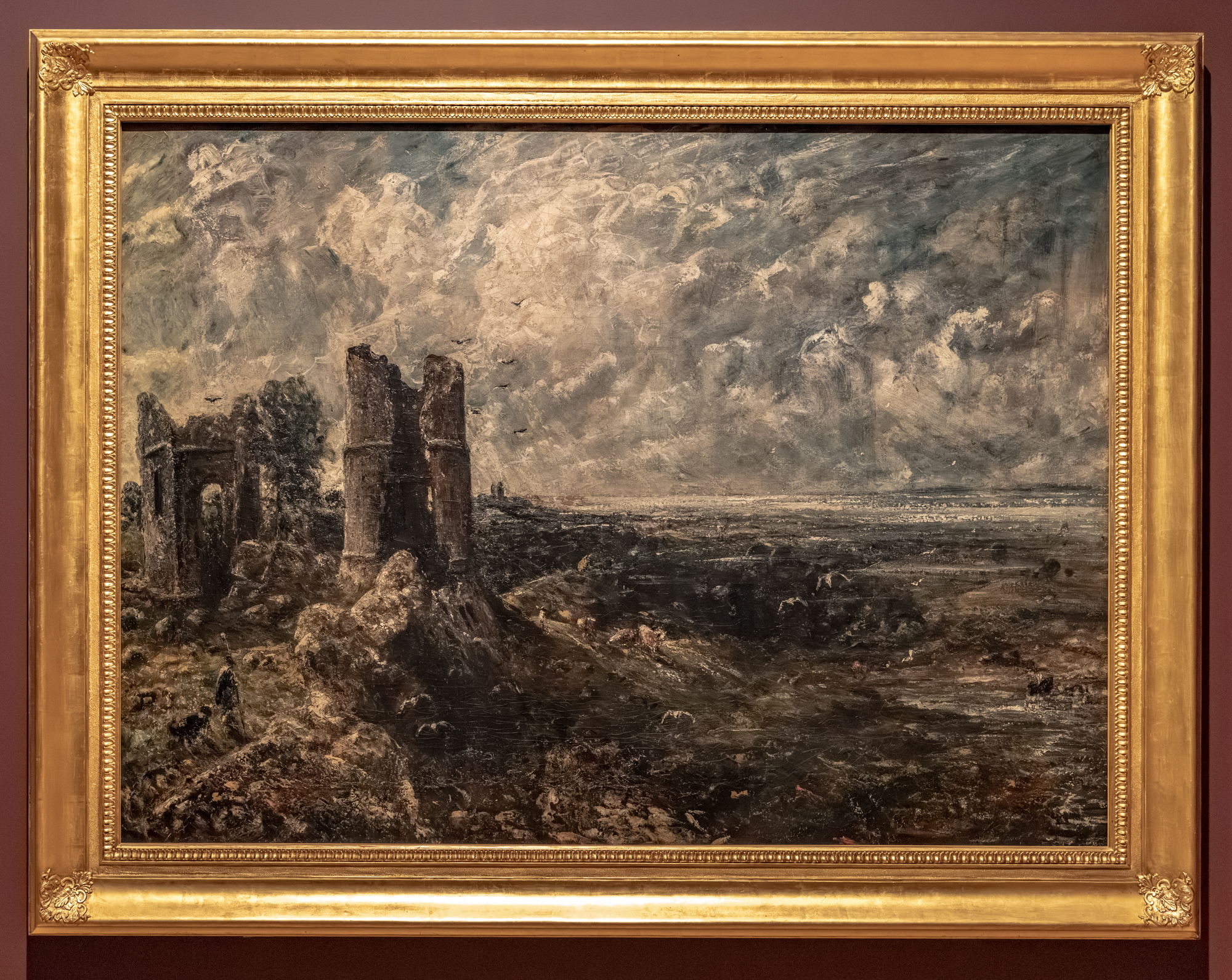
John Constable
Sketch for 'Hadleigh Castle'
c.1828-9
oil on canvas
122.6 x 167.3 cm
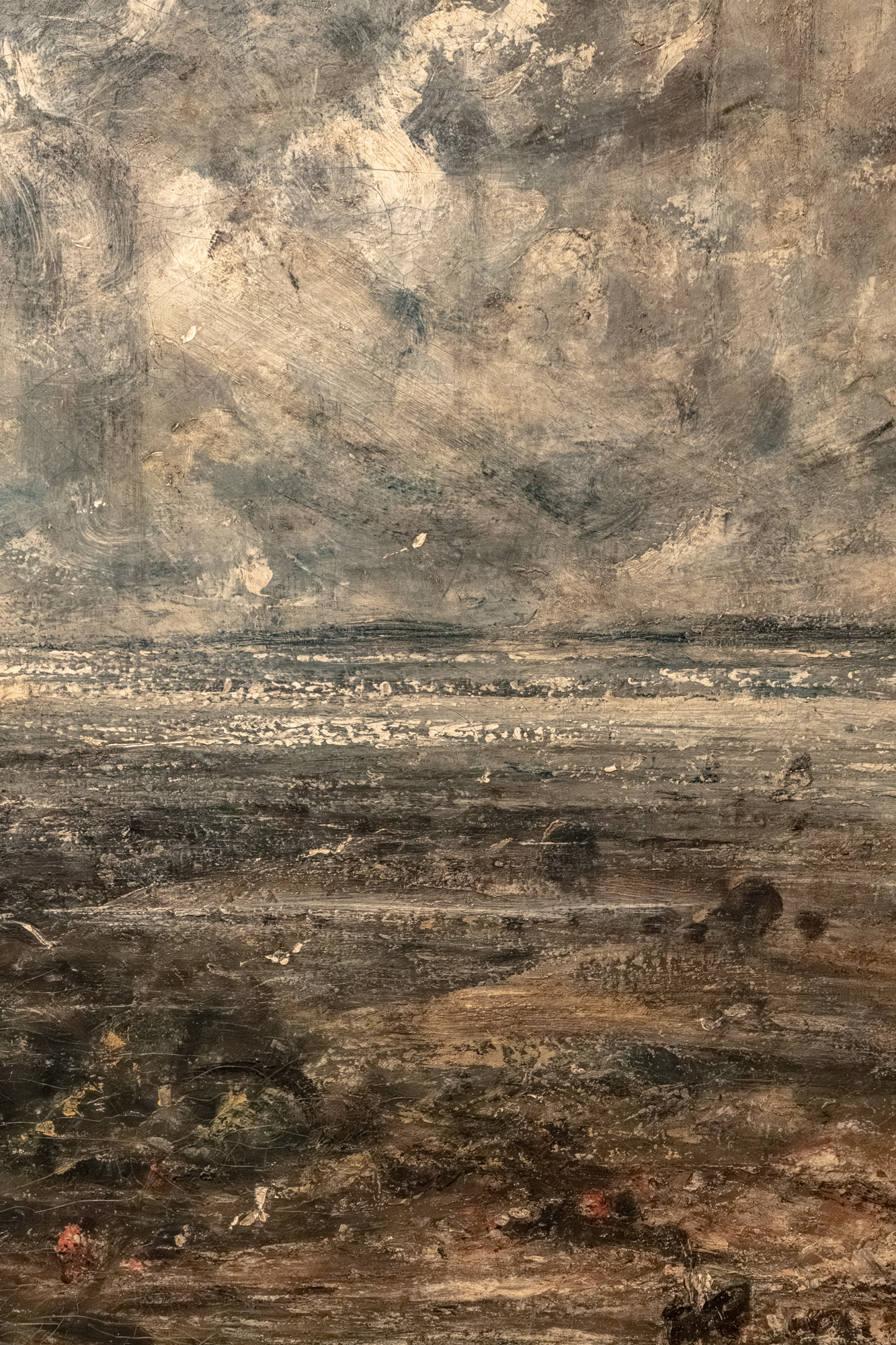
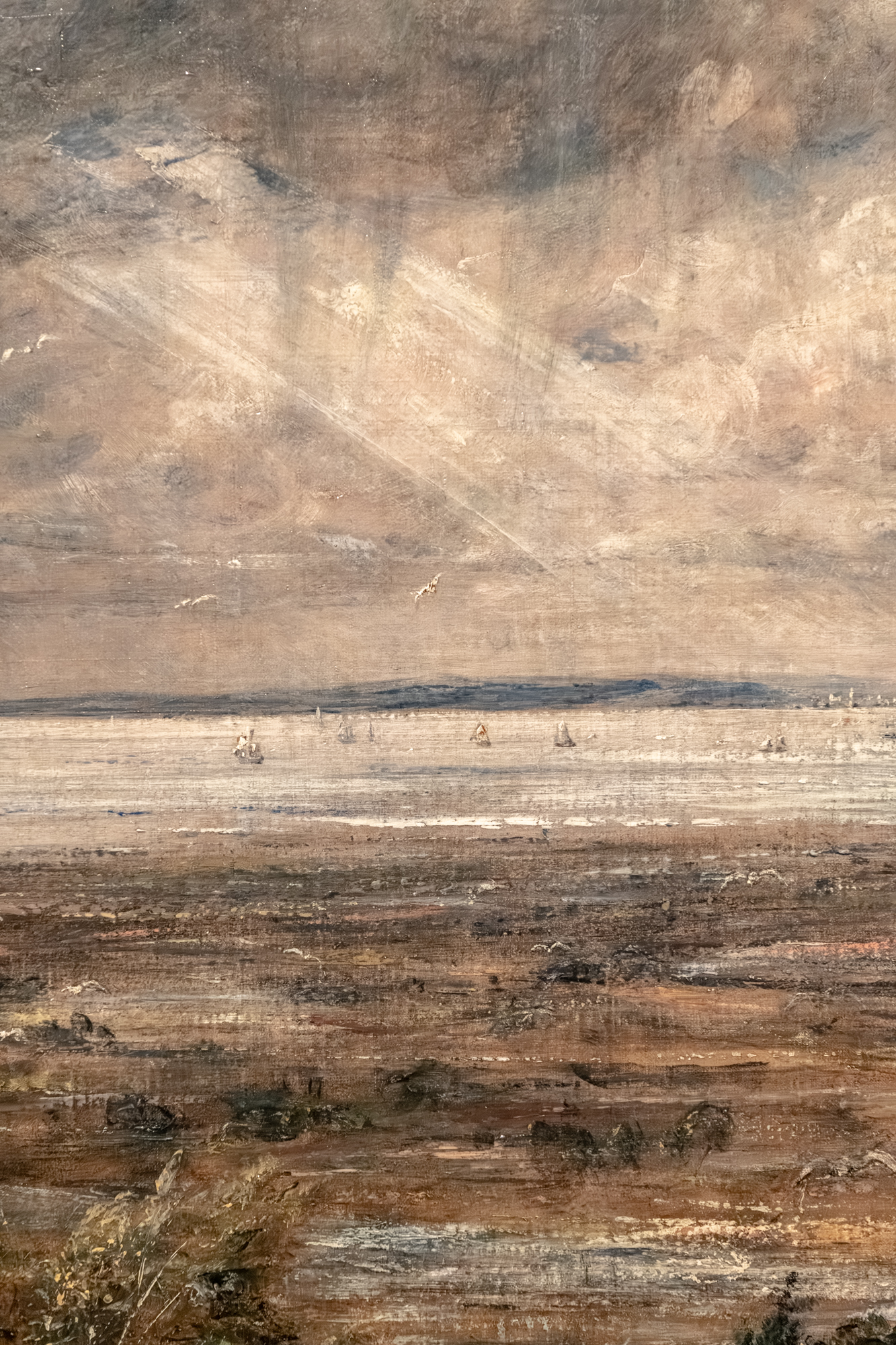
I had intended to focus on these two paintings today. I think that the two details tell quite a complete 'story'!
Sketch for 'Hadleigh Castle'
c.1828-9
oil on canvas
122.6 x 167.3 cm
I had intended to focus on these two paintings today. I think that the two details tell quite a complete 'story'!
(detail)
(detail)
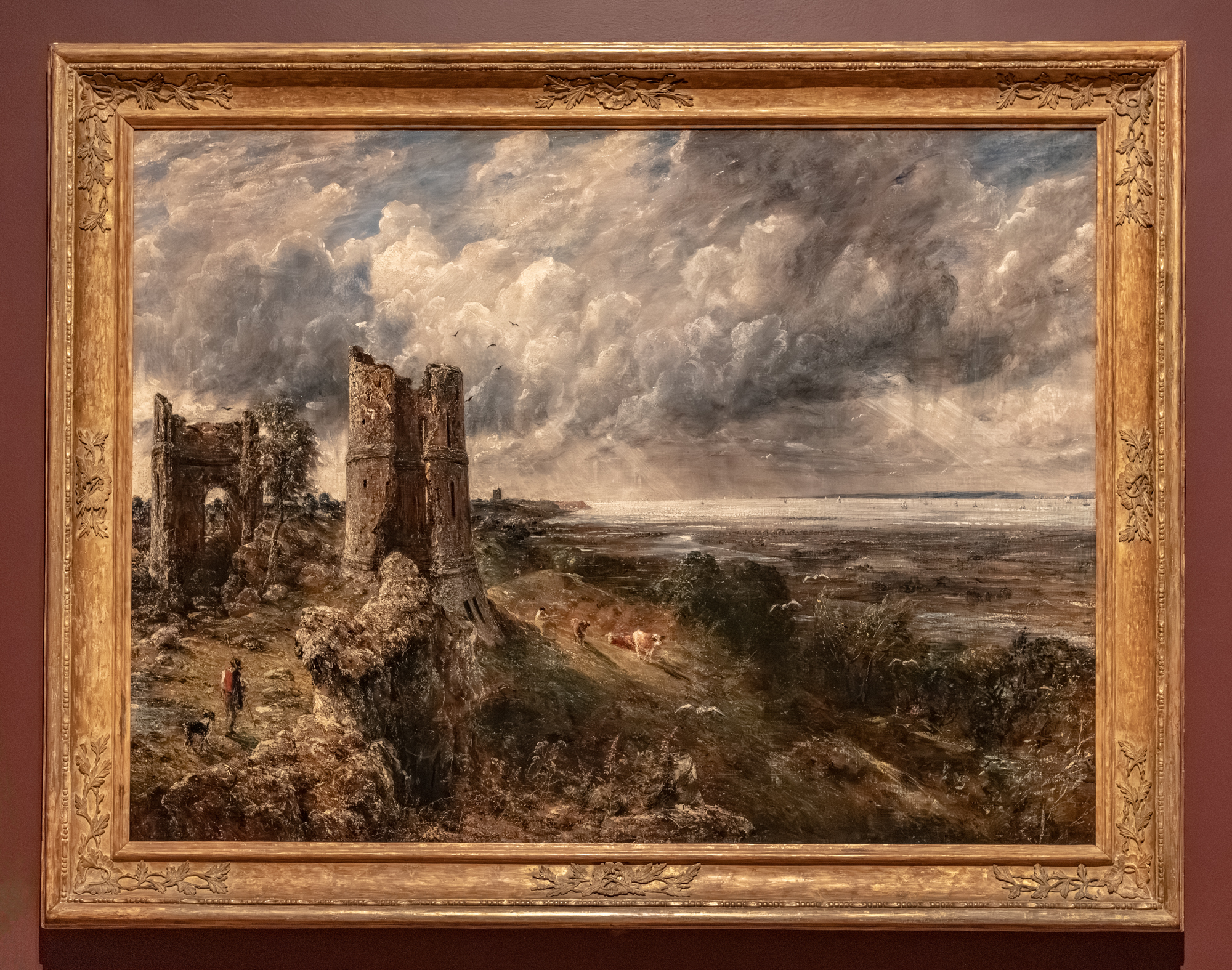
John Constable
Hadleigh Castle, The Mouth of the Thames - Morning after a Stormy Night
exhibited 1829
oil on canvas
121.9 x 164.5 cm
Hadleigh Castle, The Mouth of the Thames - Morning after a Stormy Night
exhibited 1829
oil on canvas
121.9 x 164.5 cm
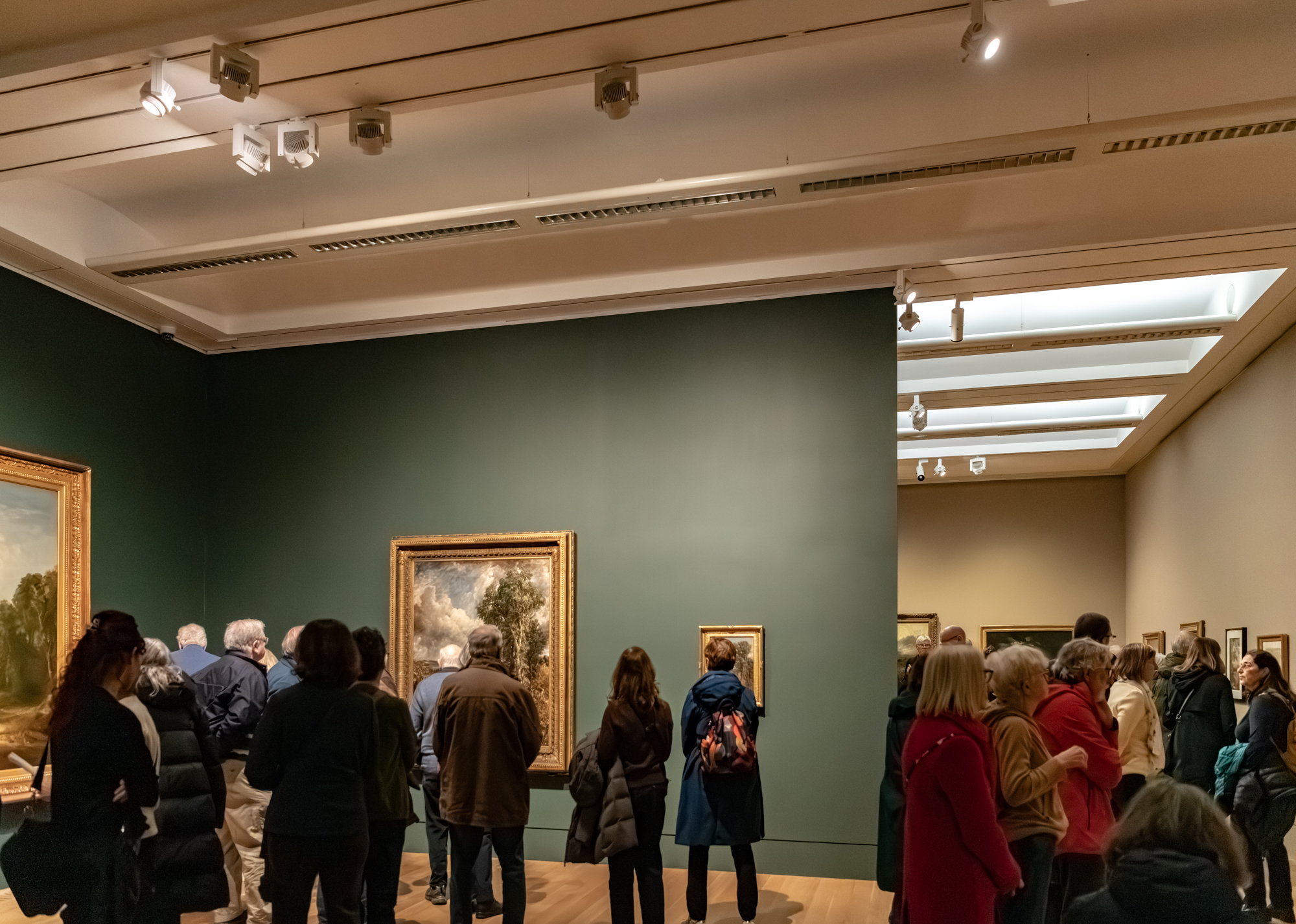
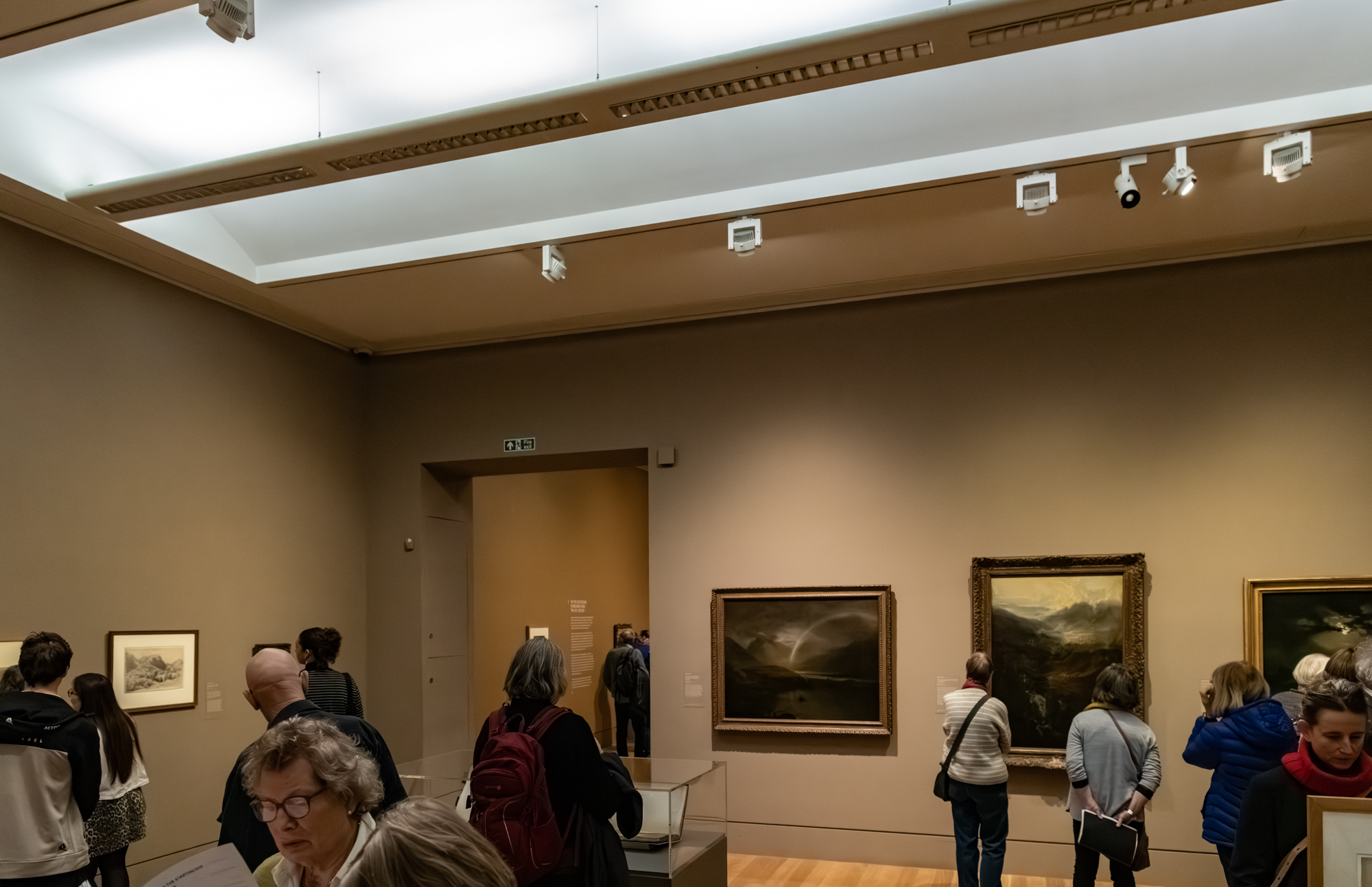
Having looked at the two Hadleigh Castle paintings for a while I considered focusing on the Salisbury painting in the same room but I was distracted by a thought that somethings was a bit odd about the arrangement of the exhibition and that I should check back to the beginning.
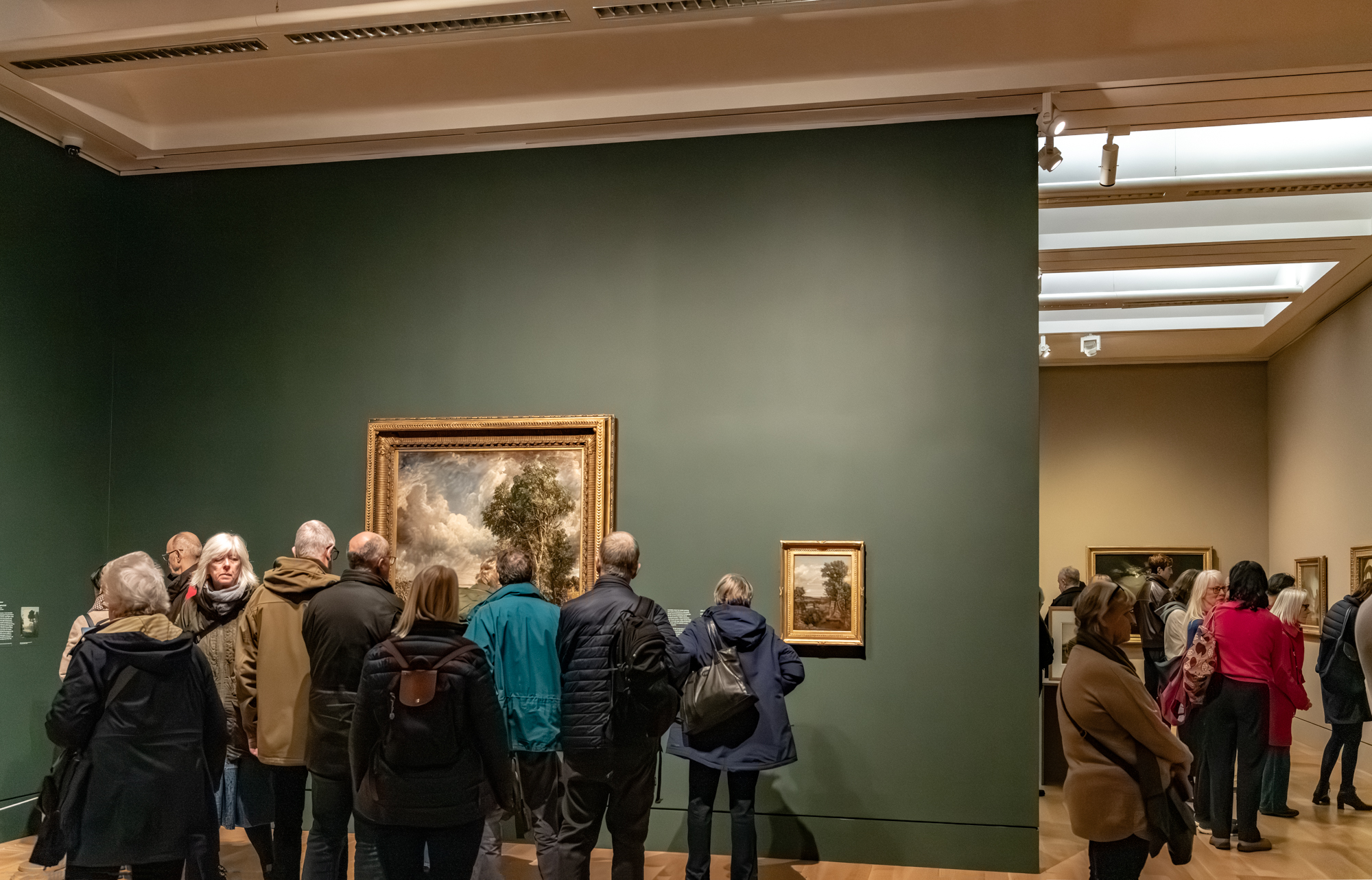
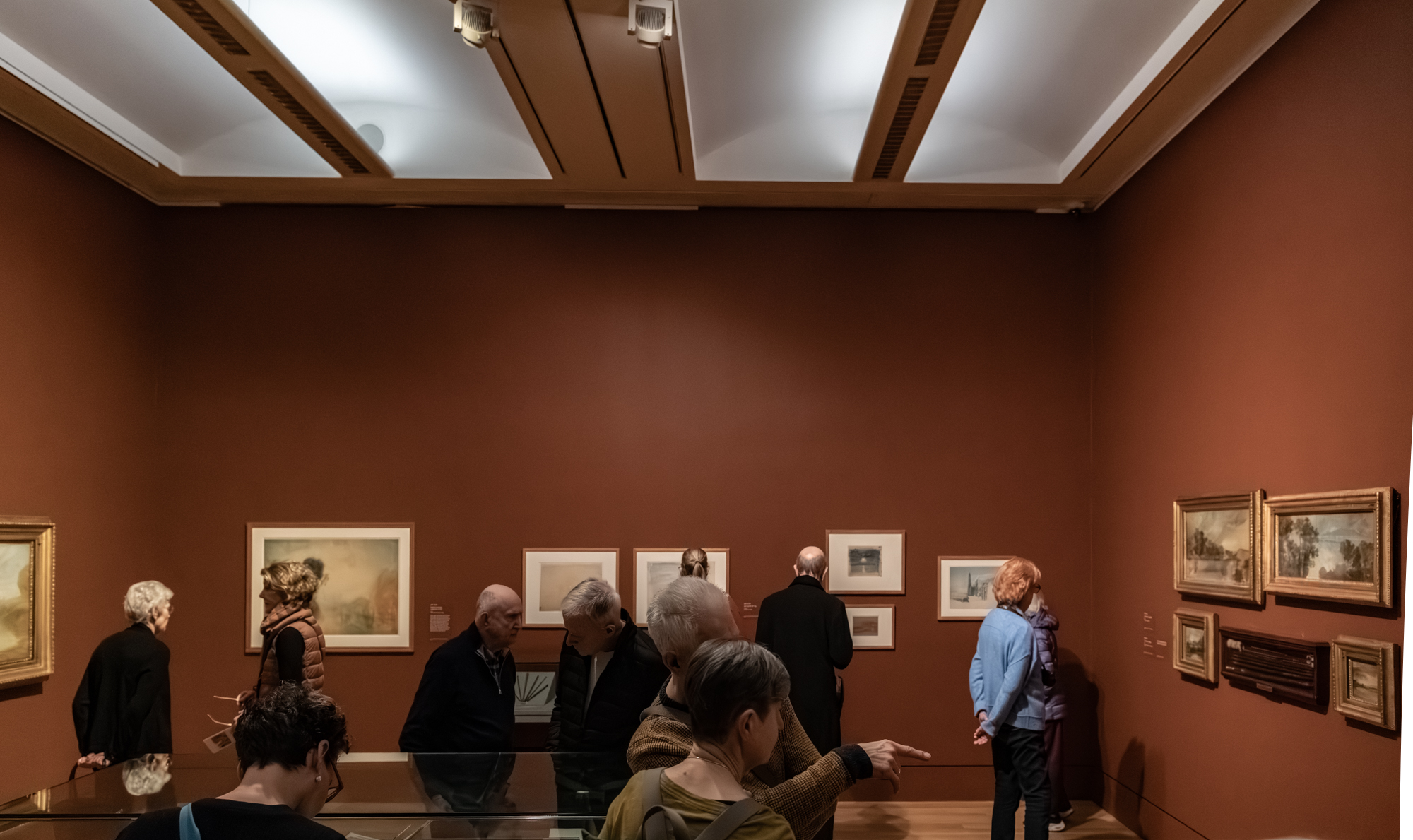
Entrance room of the exhibition.
Having walked back through the 'crowds' it only took a moment to realise that the lighting in the first two rooms was missing the florescent lights and so all the works appeared to have much more depth and colour continuity! I asked the invigilator if it was an accident and that the florescent lights would have normally been on but they did not know either way.
As the colour continuity does, in a sense, make or break the paintings by both artists I will look carefully at the first two rooms which I have previously skated over as they tend to be very busy with new visitors to the exhibition.
Some of the paintings in the first room are out of chronological order so comparison with similar works hung elsewhere should be possible.
Some of the paintings in the first room are out of chronological order so comparison with similar works hung elsewhere should be possible.
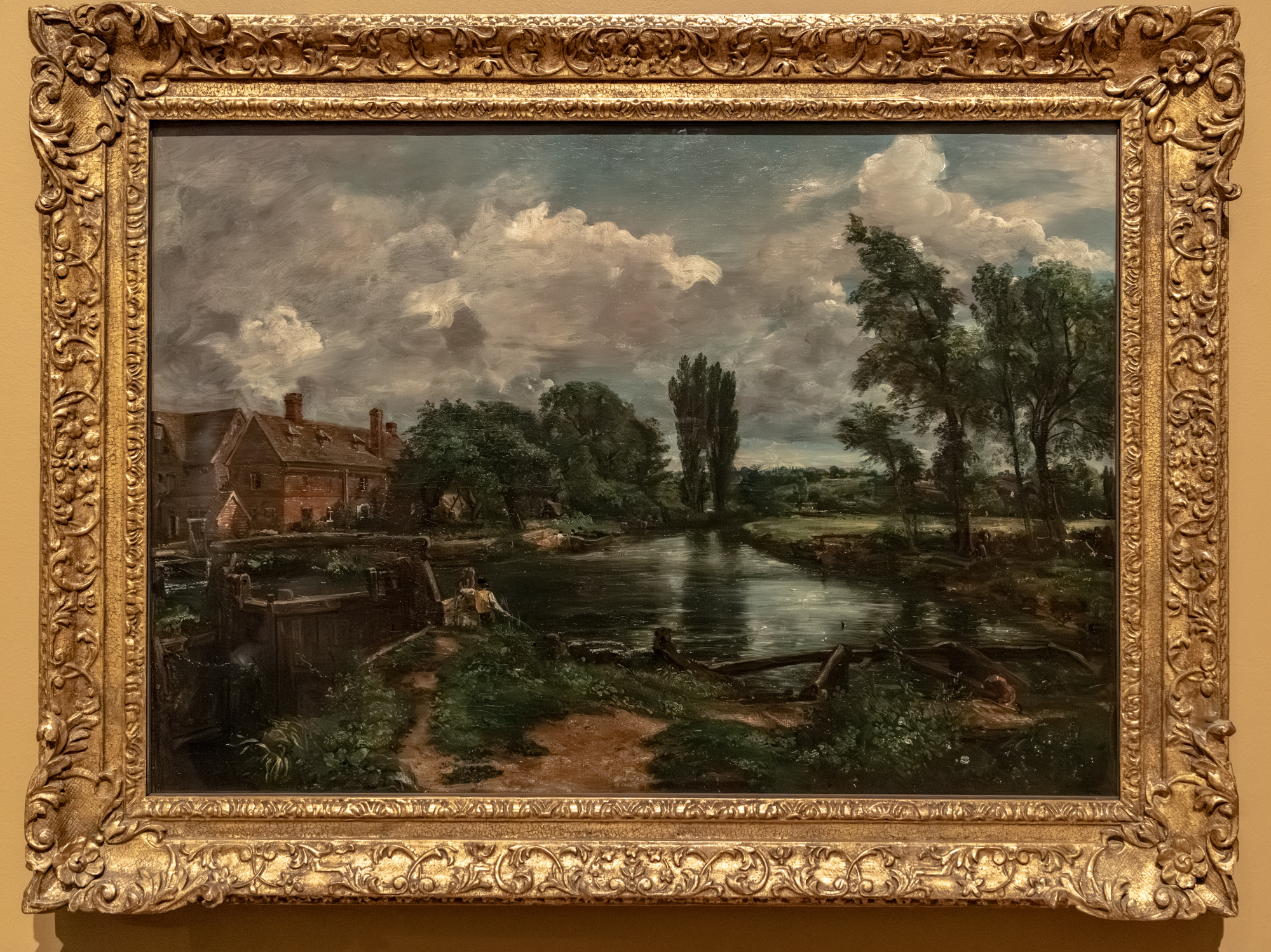
John Constable
Flatford Mill from the Lock
exhibited 1812
oil on canvas
66 x 92.7 cm
On the colour front I had a memory of a painting with a single 'green', I had thought 'Windsor' green for some reason but I did not find it on my last visit. This time I realised that it was Flatford Mill from the Lock that I had remembered but that it was only close-up that the colour was really revealed. My idea is that base colours are used and they are then articulated tonally with the carefully added marks of paintbrush or other impliments.
Flatford Mill from the Lock
exhibited 1812
oil on canvas
66 x 92.7 cm
On the colour front I had a memory of a painting with a single 'green', I had thought 'Windsor' green for some reason but I did not find it on my last visit. This time I realised that it was Flatford Mill from the Lock that I had remembered but that it was only close-up that the colour was really revealed. My idea is that base colours are used and they are then articulated tonally with the carefully added marks of paintbrush or other impliments.
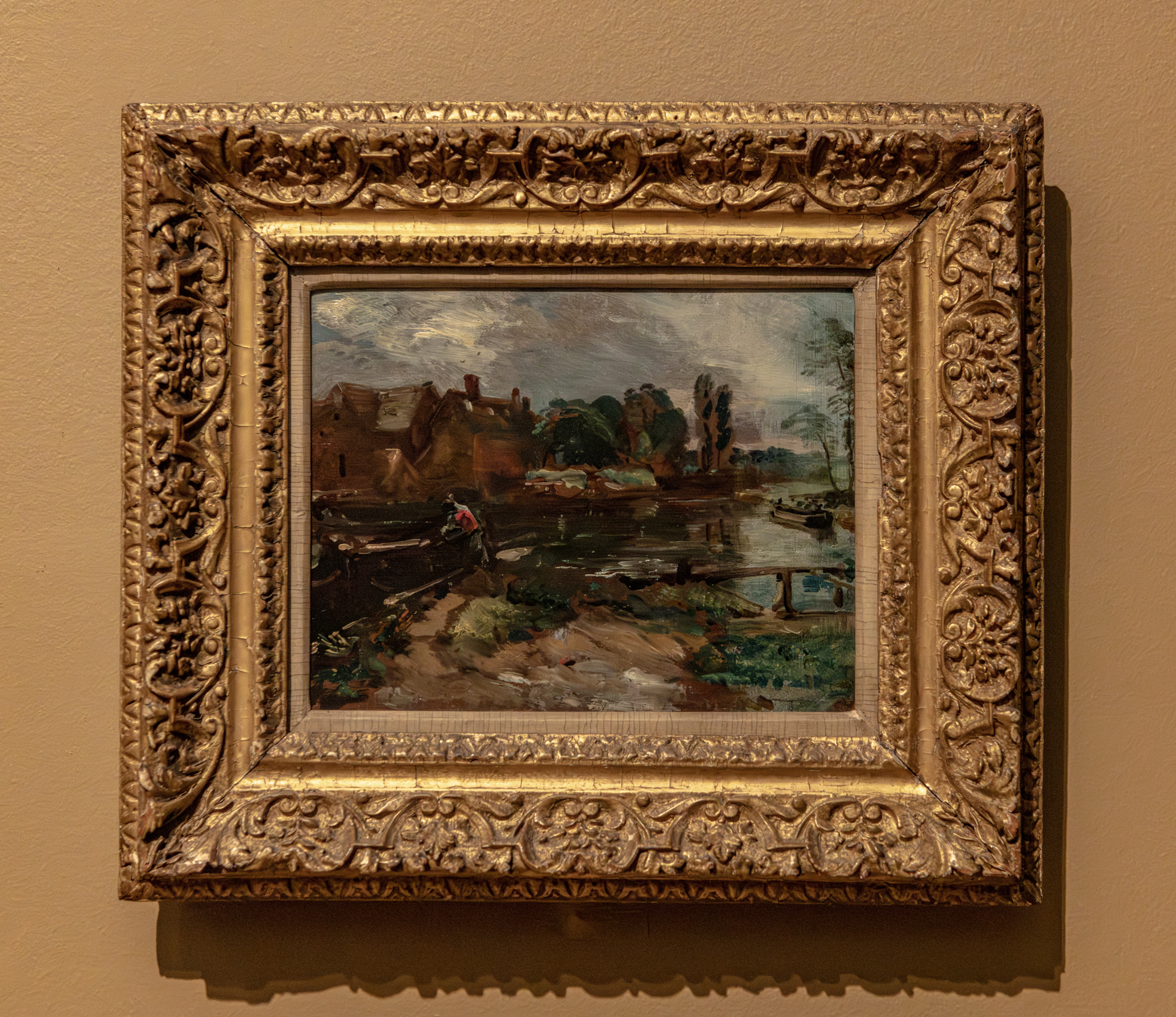
John Constable
Flatford Mill from the Lock
1810
oil paint on beige paper mounted on canvas
19 x 24.1 cm
Clark Art Institute, Williamstown, Massachusetts, USA
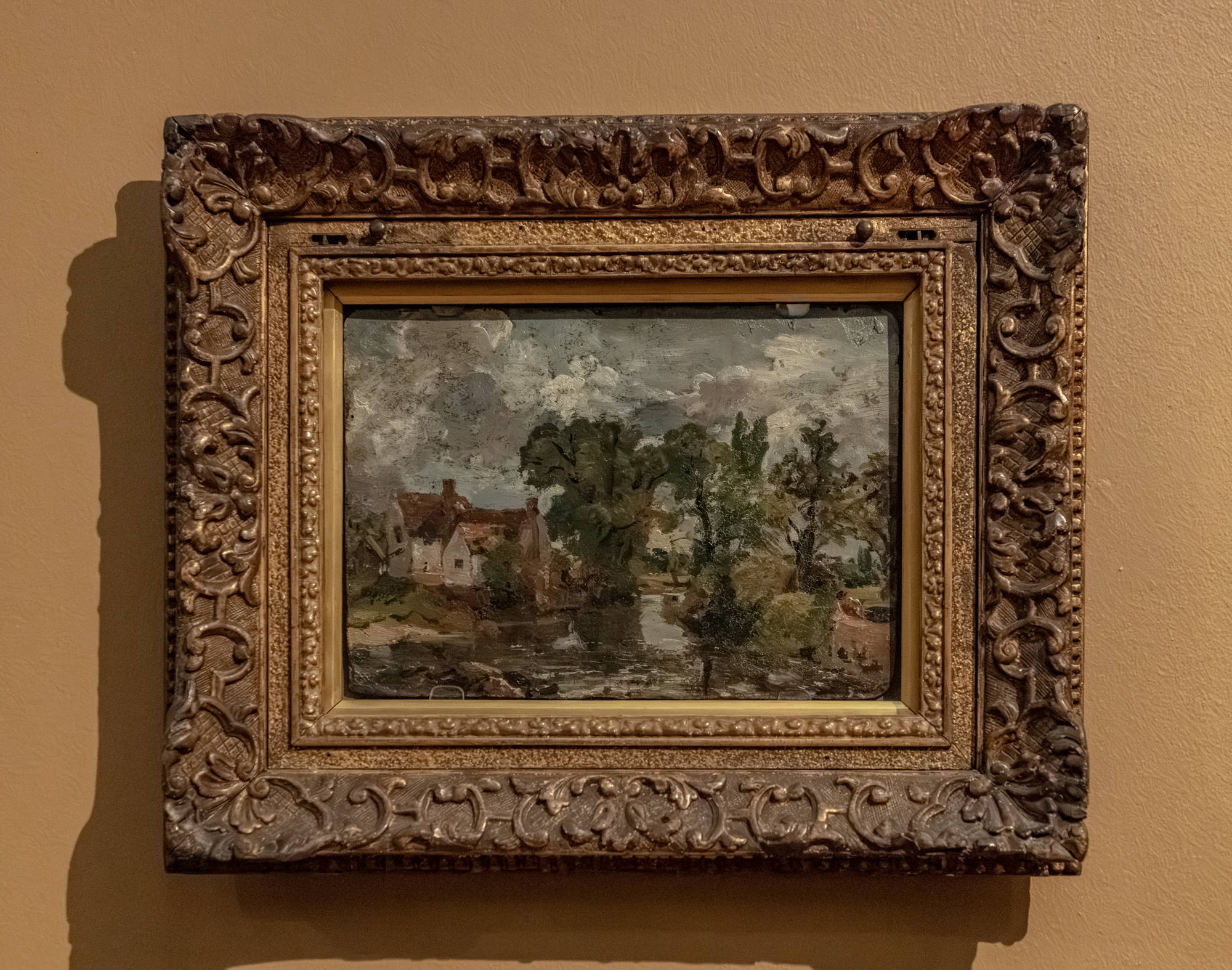
I will re-visit these and other smaller paintings as here colours are more confined to individual applications by whatever means.
The effective colour count in the 'Lock' painting, above goes up considerably and the colour interactions in the other painting above take on more structural meaning.
Flatford Mill from the Lock
1810
oil paint on beige paper mounted on canvas
19 x 24.1 cm
Clark Art Institute, Williamstown, Massachusetts, USA
I will re-visit these and other smaller paintings as here colours are more confined to individual applications by whatever means.
The effective colour count in the 'Lock' painting, above goes up considerably and the colour interactions in the other painting above take on more structural meaning.
(tbc)
I should probably look more at some of the Turner paintings again at a future visit!
I find that exhibitions can be too large and it is simply beyond my powers of concentration to last much more than an hour at a time. Today I arrived at 11:15am and left via a walk through of the Lee Miller exhibition and the general 20th Century galleries just after 12:15pm.
I should probably look more at some of the Turner paintings again at a future visit!
I find that exhibitions can be too large and it is simply beyond my powers of concentration to last much more than an hour at a time. Today I arrived at 11:15am and left via a walk through of the Lee Miller exhibition and the general 20th Century galleries just after 12:15pm.
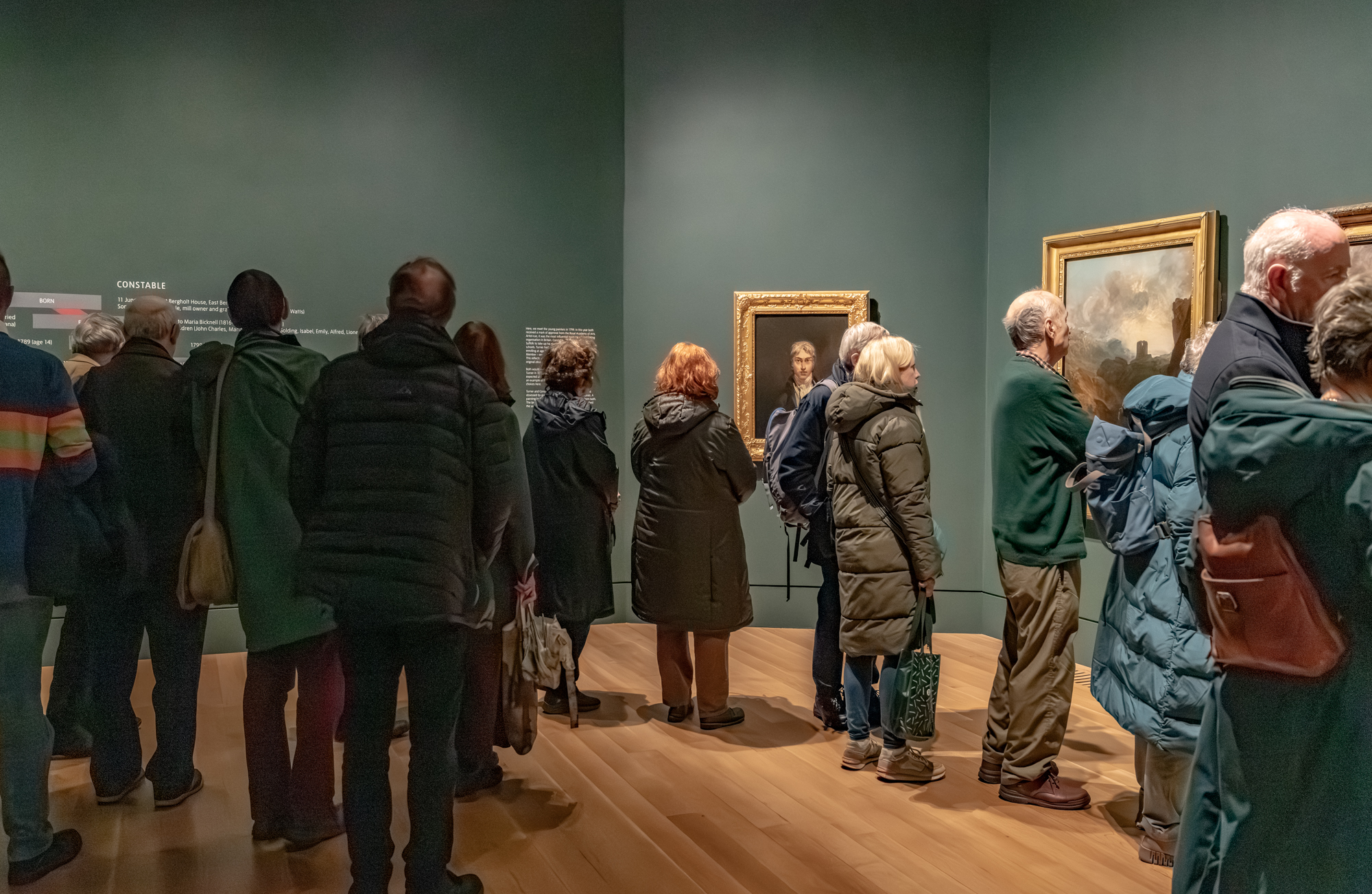
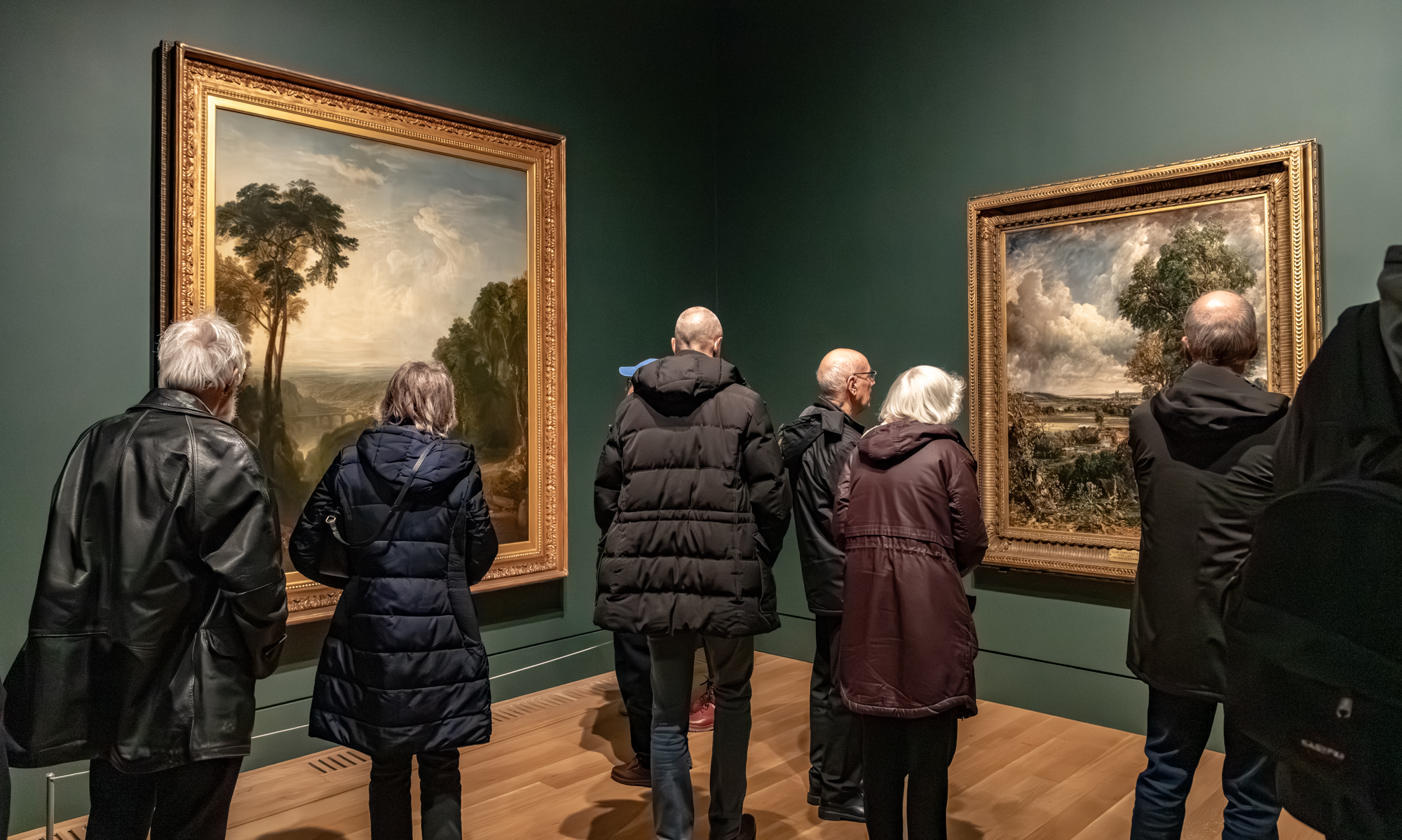
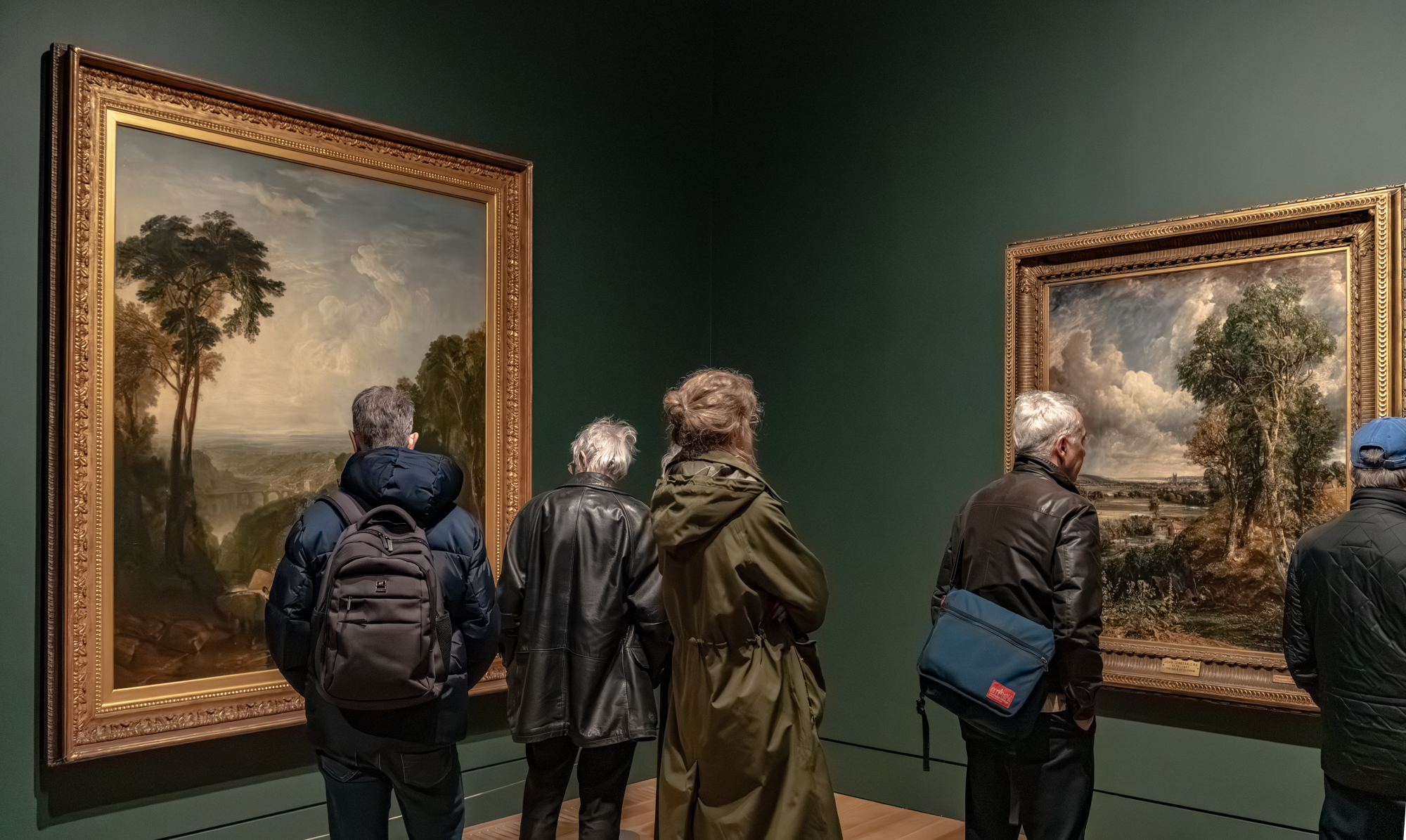
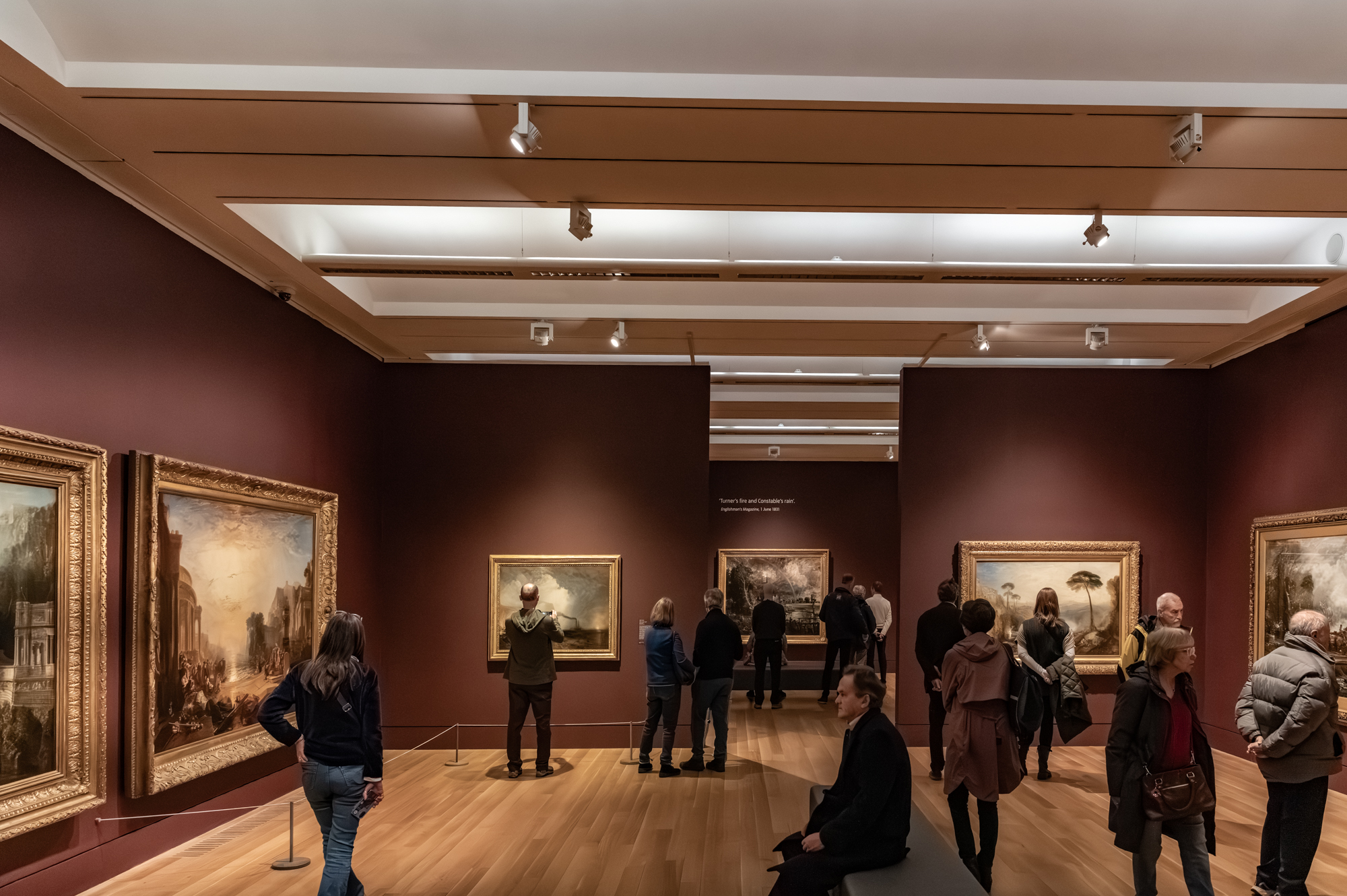
I arrived at about 11:00am and basically spent most of an hour looking at the four main paintings in the first two rooms of the exhibition which do not have the florescent lighting.
I was also watching the audience lines not least for the opportunity to grab a full image.
There were just a few occasions in the hour when there was not a line from the entrance doors to the first paintings.
I was also watching the audience lines not least for the opportunity to grab a full image.
There were just a few occasions in the hour when there was not a line from the entrance doors to the first paintings.
It is a very large exhibition and the paying visitors (as opposed to Tate Members) have to work very hard to get all the way through. The latter parts of the exhibition have been much less busy on every occasion that I have visited.
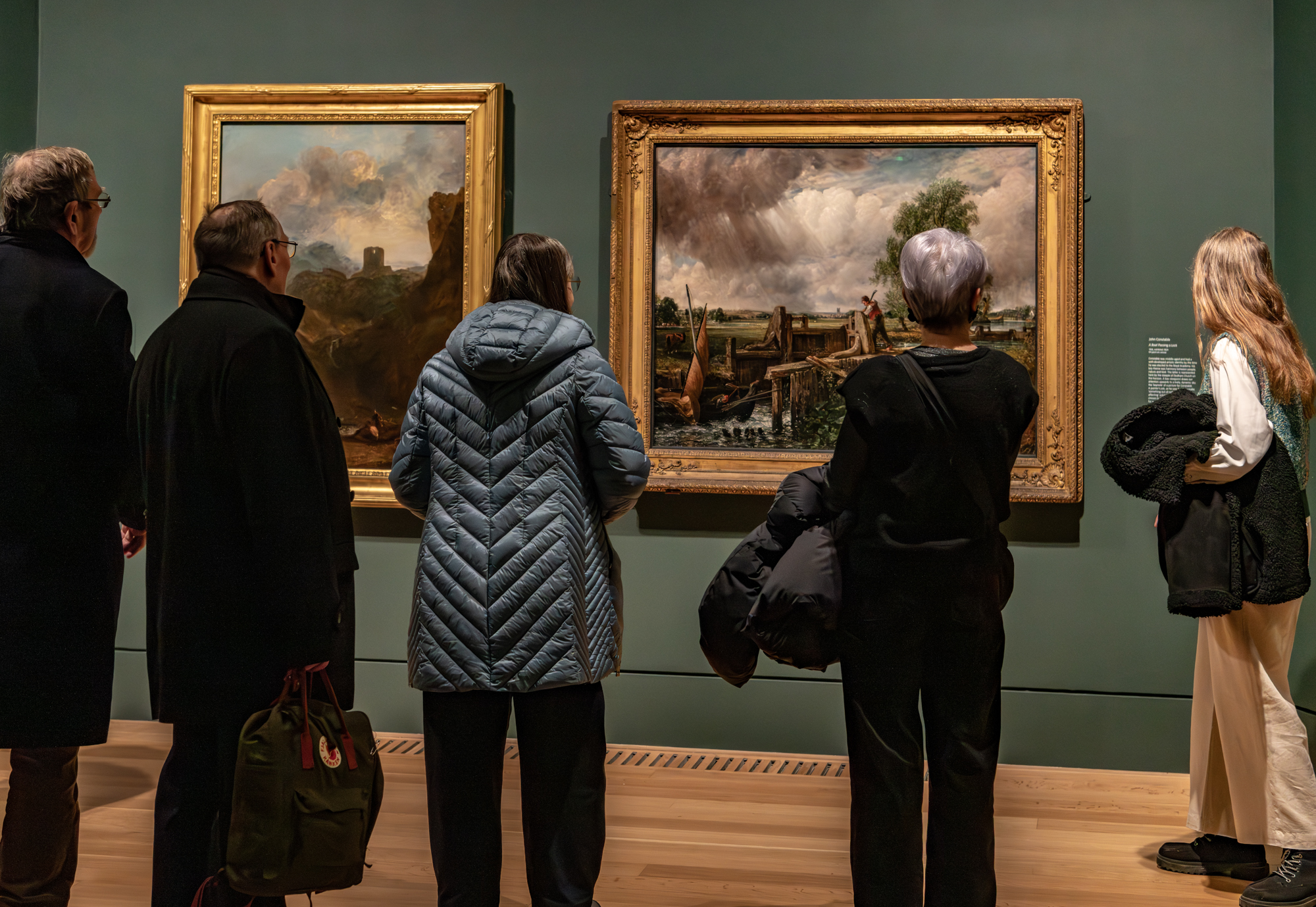
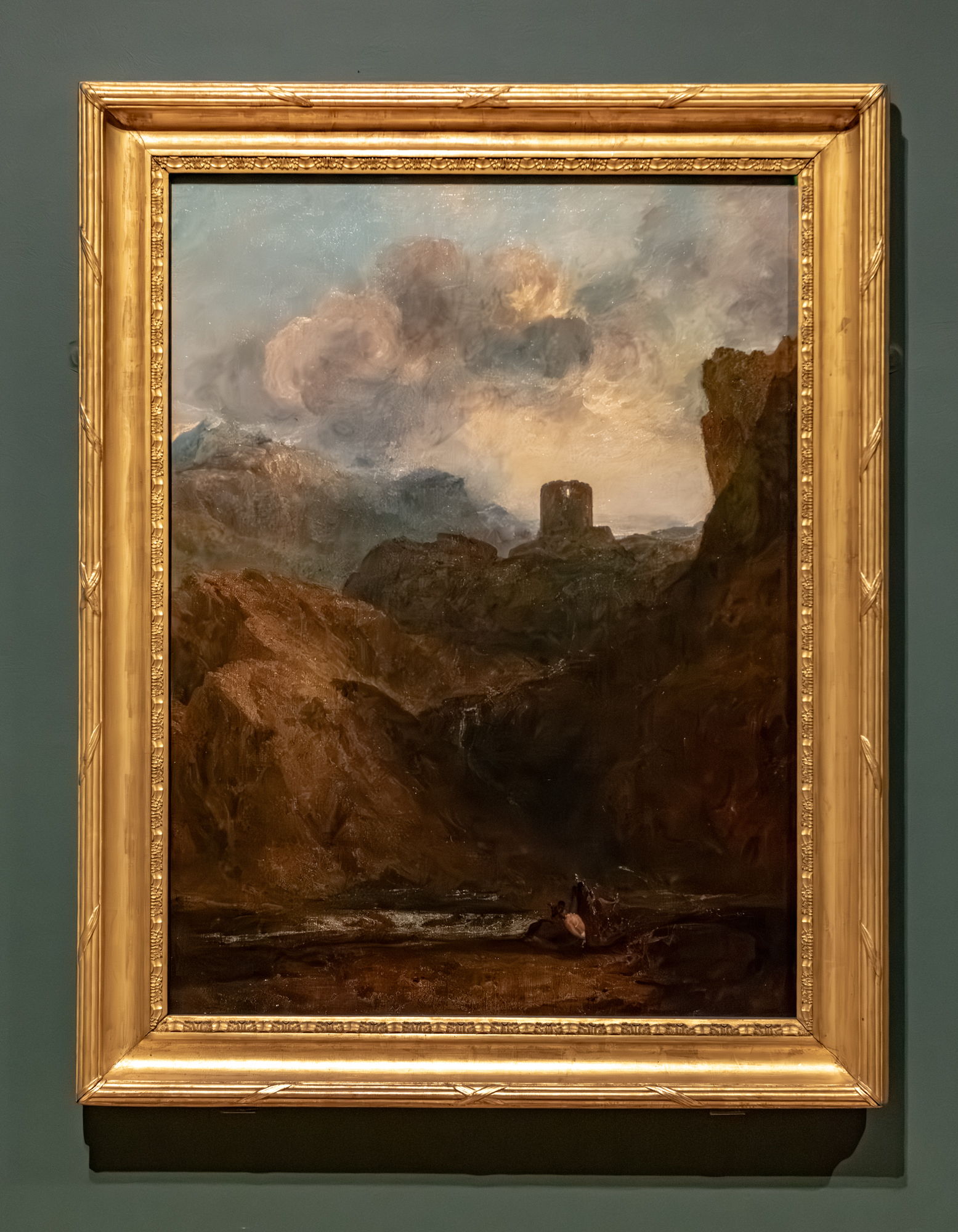
JMW Turner
Dolbadern Castle, North Wales
Exhibited 1800
oil on canvas
119.4 x 90.2 cm
Dolbadern Castle, North Wales
Exhibited 1800
oil on canvas
119.4 x 90.2 cm
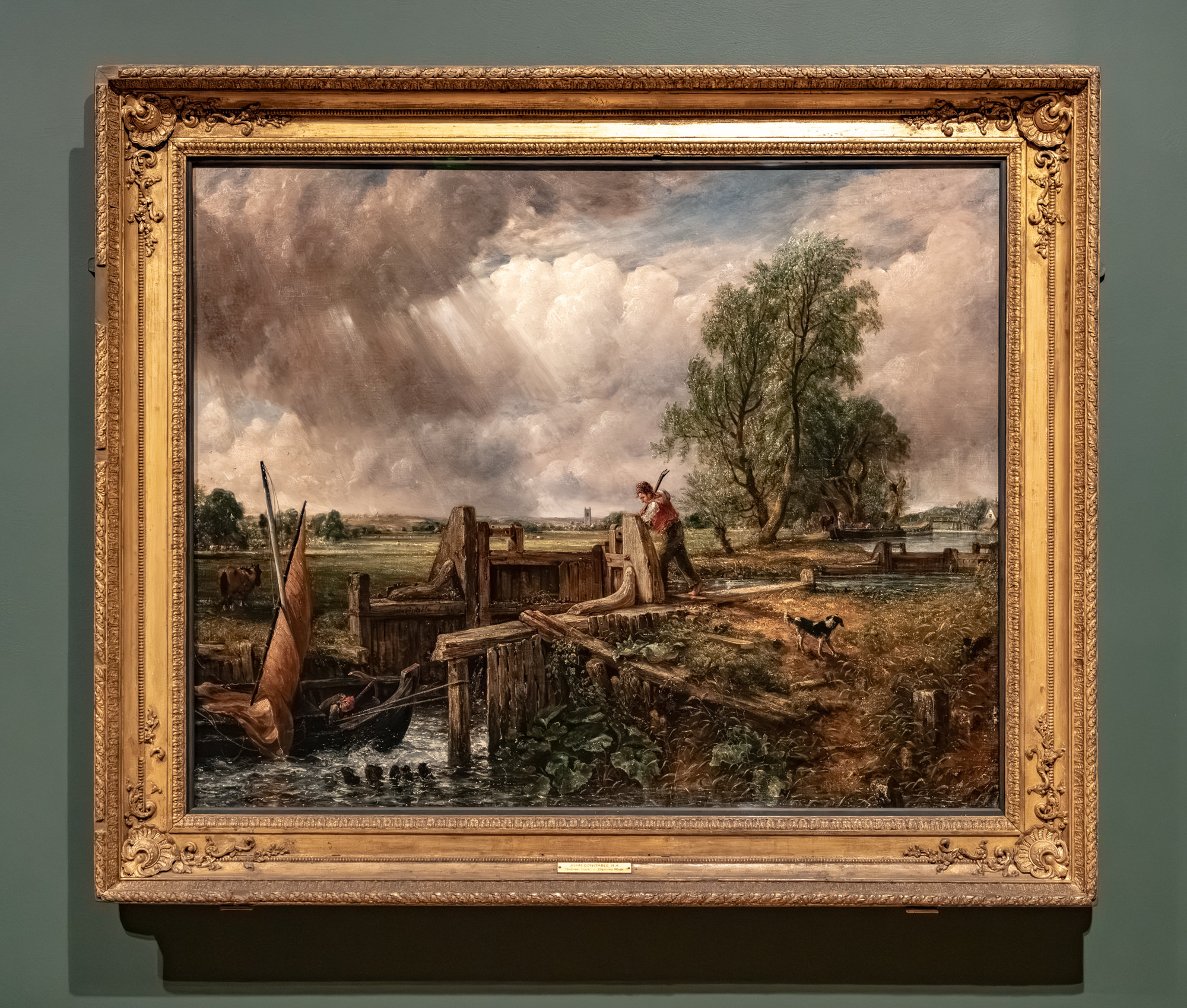
John Constable
A Boat Passing a Lock
1826, exhibited 1829
oil on canvas
101.6 x 127 cm
A Boat Passing a Lock
1826, exhibited 1829
oil on canvas
101.6 x 127 cm
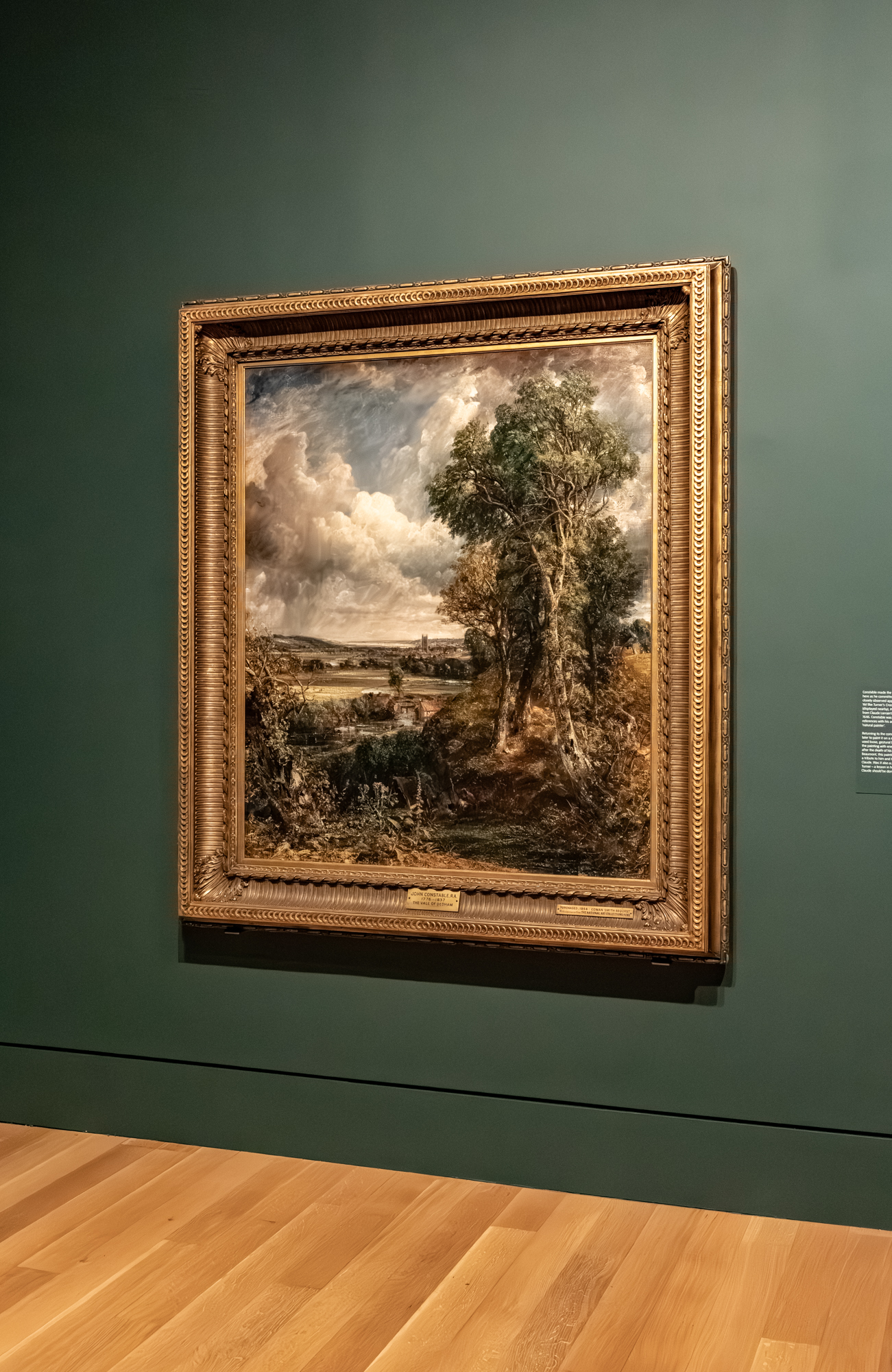
John Constable
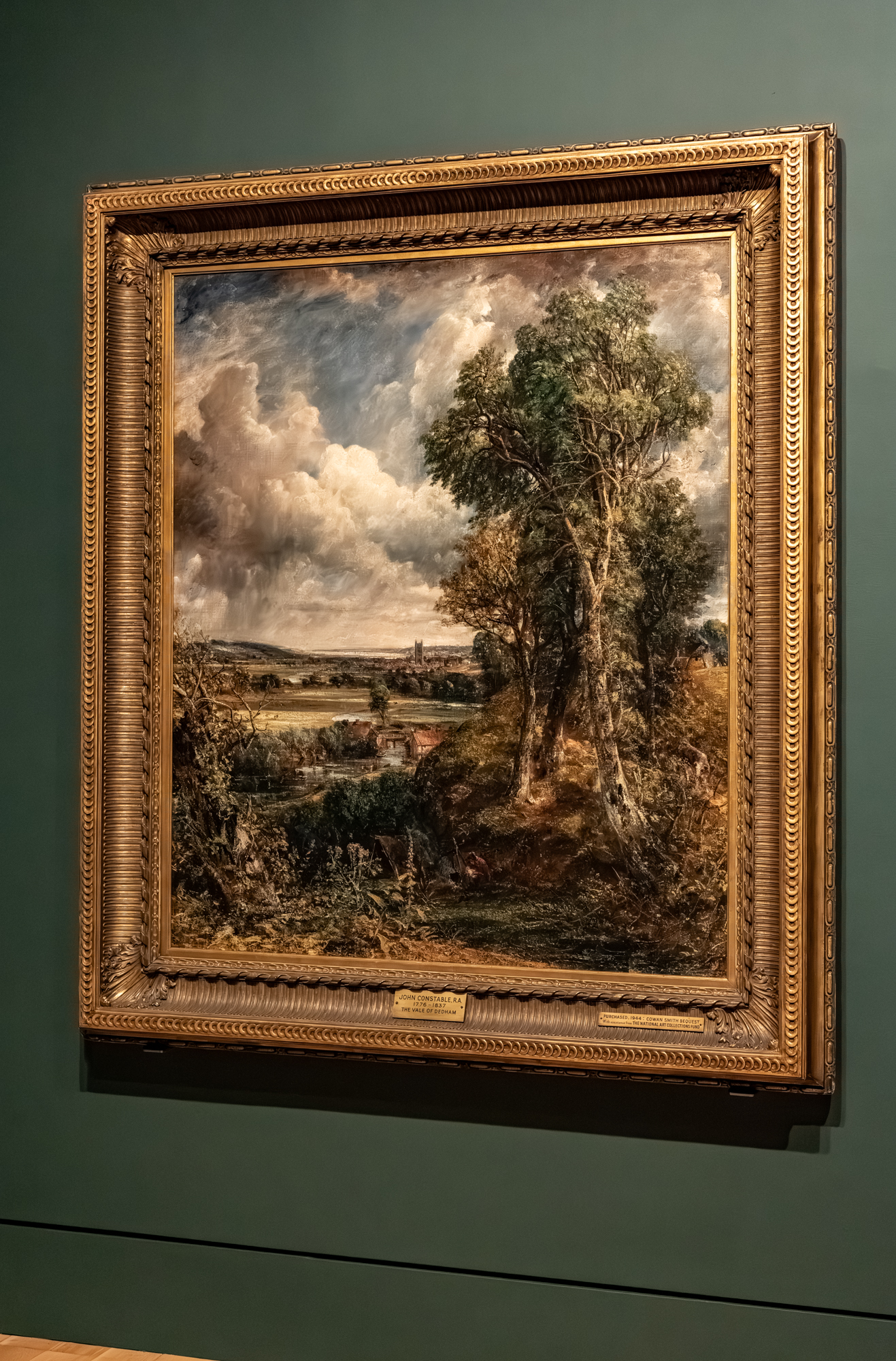
Dedham Vale
exhibited 1828
oil on canvas
144.5 x 122 cm
Dedham Vale
exhibited 1828
oil on canvas
144.5 x 122 cm
JMW Turner
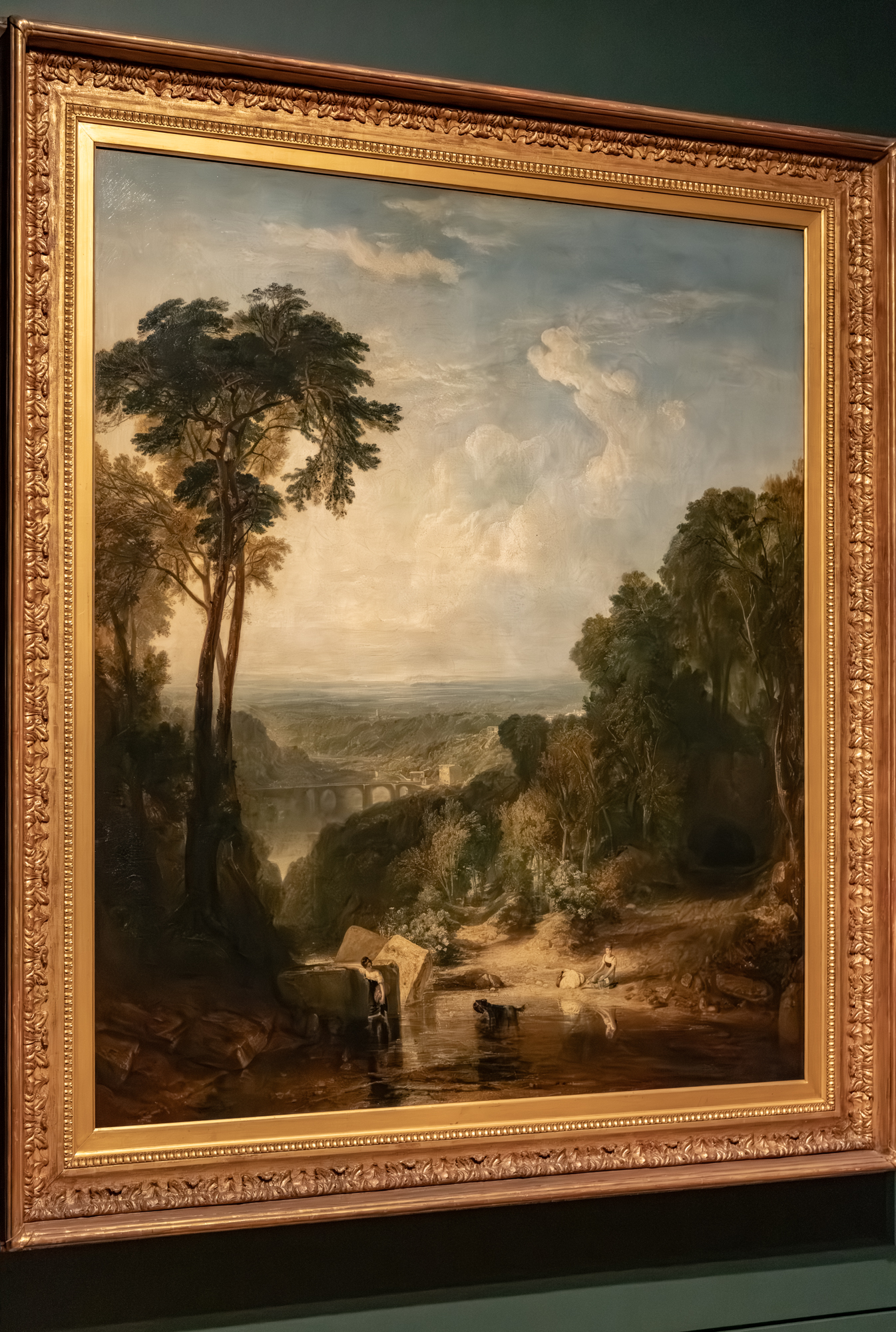
Crossing the Brook
exhibited 1815
oil on canvas
193 x 165.1 cm
Crossing the Brook
exhibited 1815
oil on canvas
193 x 165.1 cm
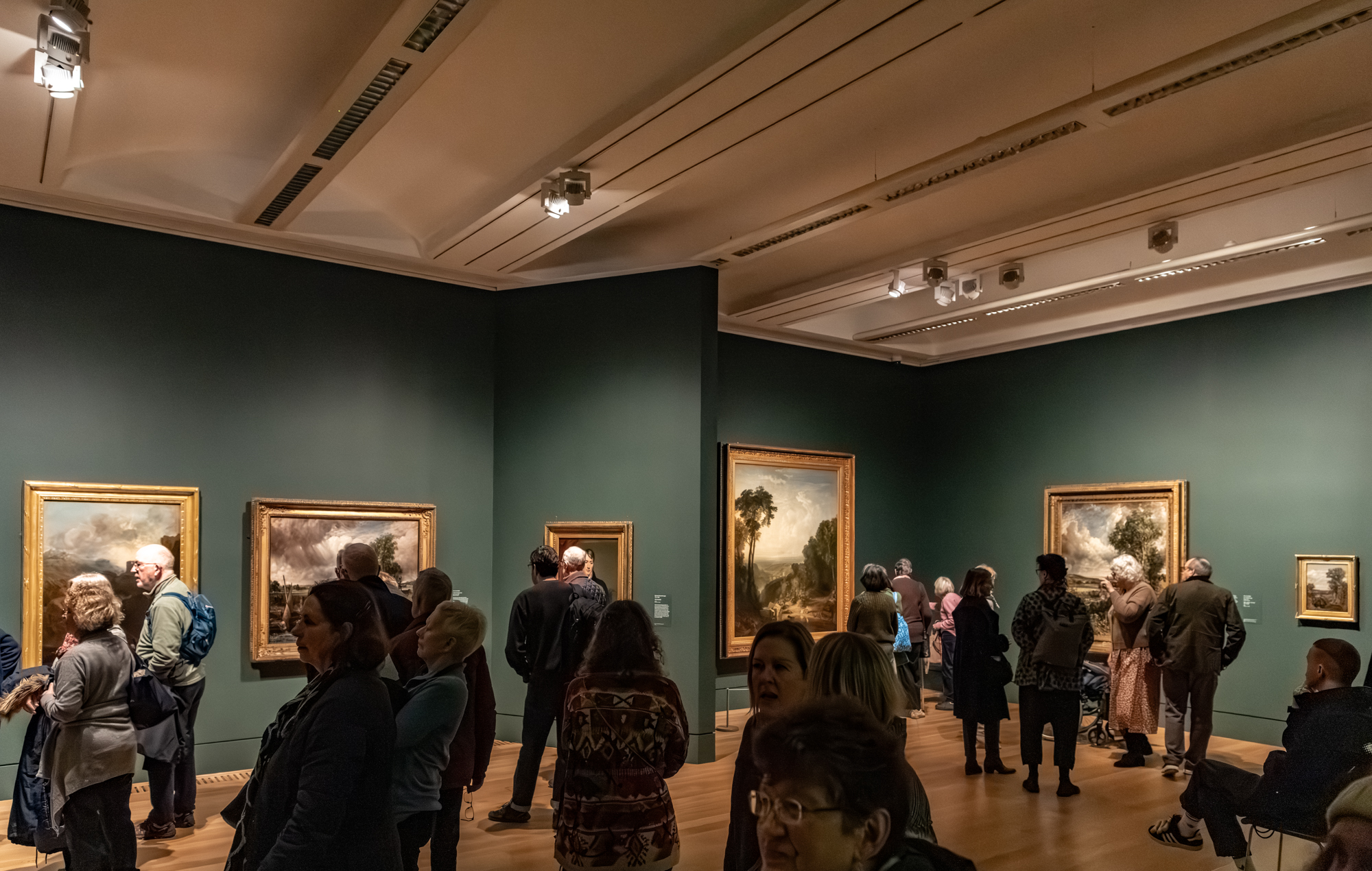
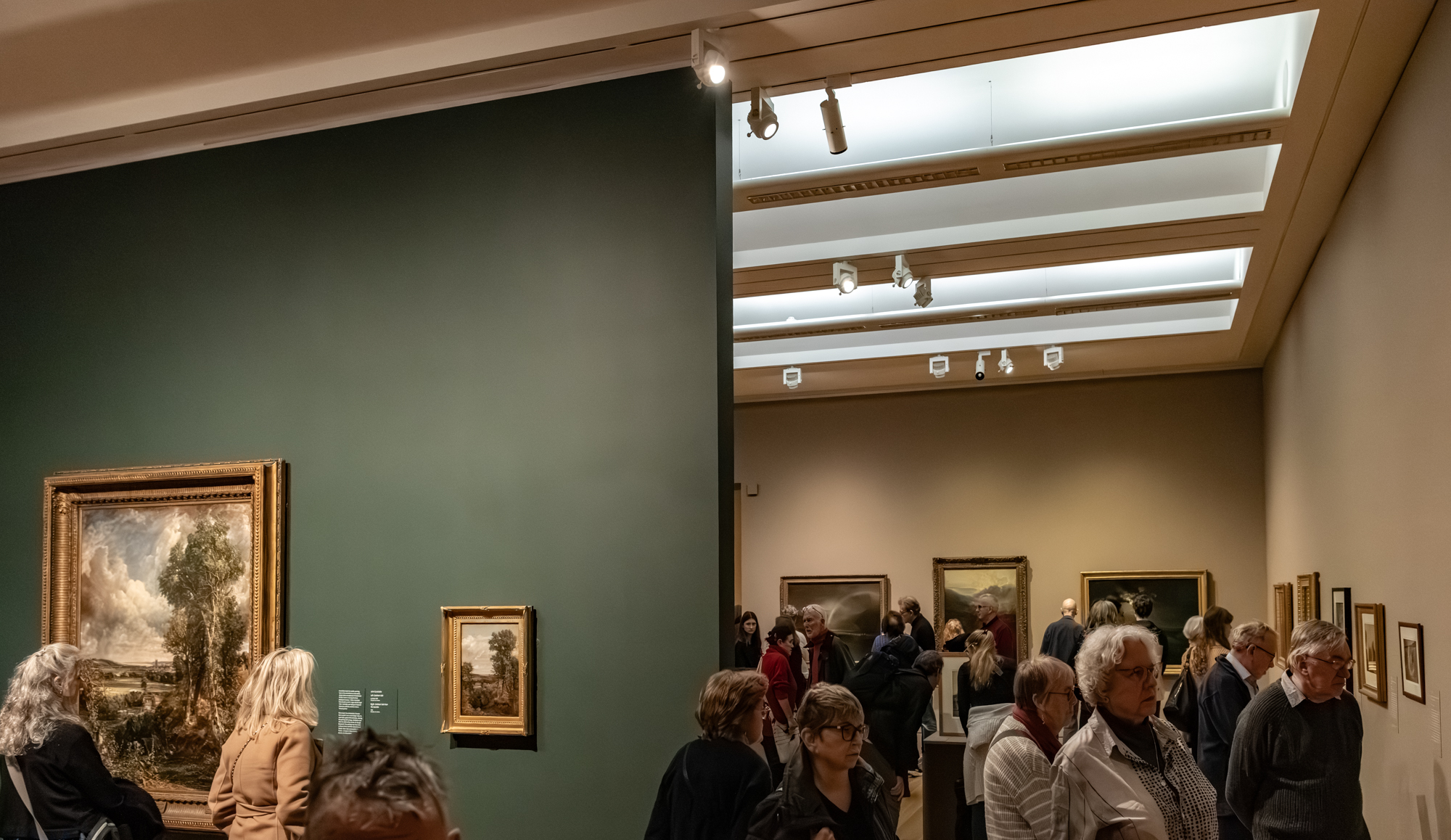
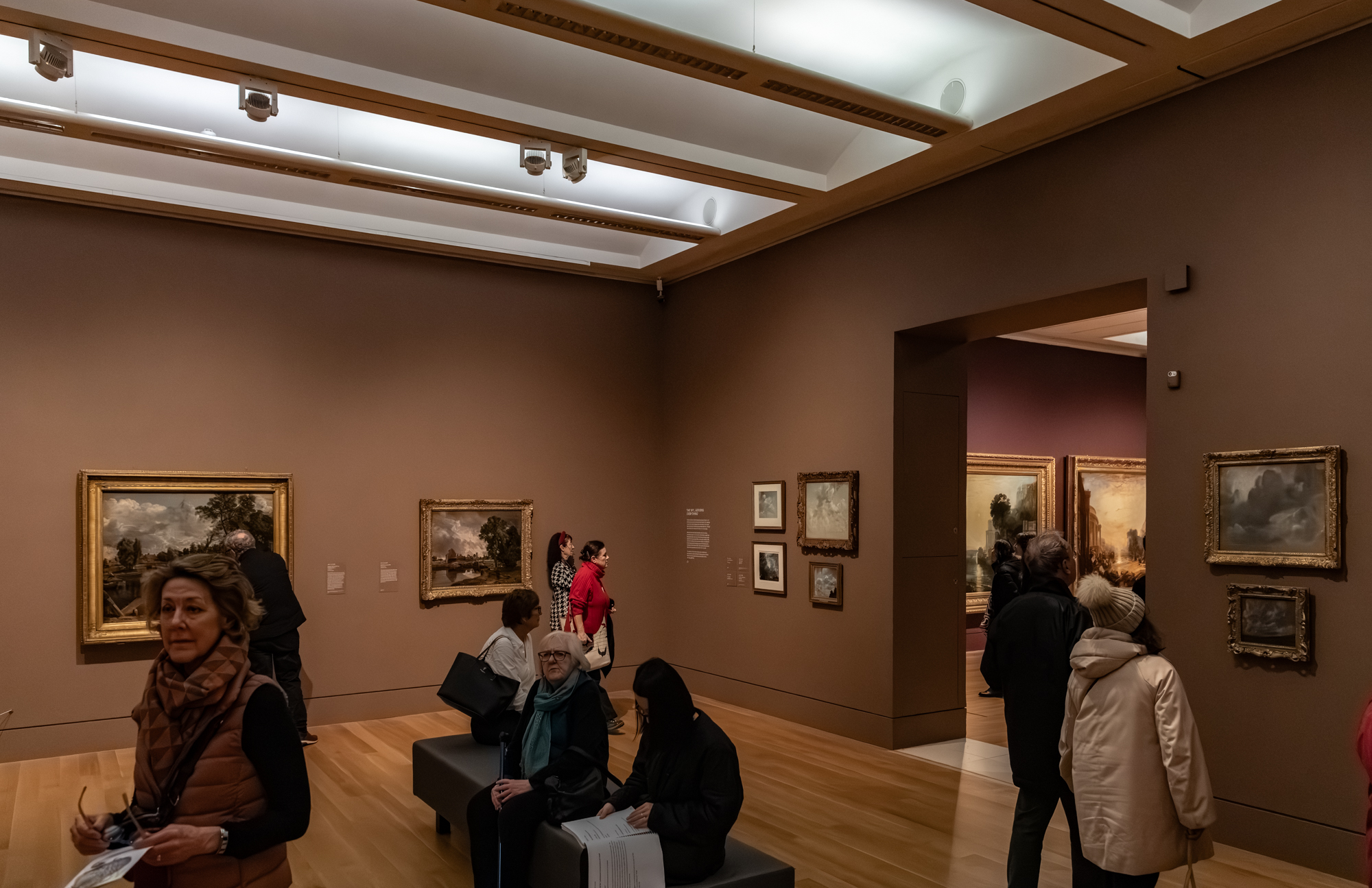
The first two rooms show the paintings under normal electric lighting. The rest of the exhibition is part illuminated with florescent lights with a very limited spectrum.
There is not a great deal of colour in either artist's paintings. They rely on a transitional background colouring drawn with overpainting but mostly avoiding 'brush marks'.
There is not a great deal of colour in either artist's paintings. They rely on a transitional background colouring drawn with overpainting but mostly avoiding 'brush marks'.
Capturing a moment in time is evidently both artist's intention and it is remarkable how both work so assiduously to complete that process. Occasionally the observation is a little inconsequential but the focus is unrelenting from the foreground to the far distance depicted.
The transition to the florescent lit rooms is somewhat stark.
Because the initial rooms are so busy I can see how I had overlooked the lighting transition on my first visits.
Because the initial rooms are so busy I can see how I had overlooked the lighting transition on my first visits.
I think that the ground colour continuity suffers most under the florescent lights as it is mostly quite subtle. I will have another look to see how the chromatic violence of florescent lights can be identified in this exhibition!
Today I was only planning to do a walk through and then visit the Lee Miller exhibition.
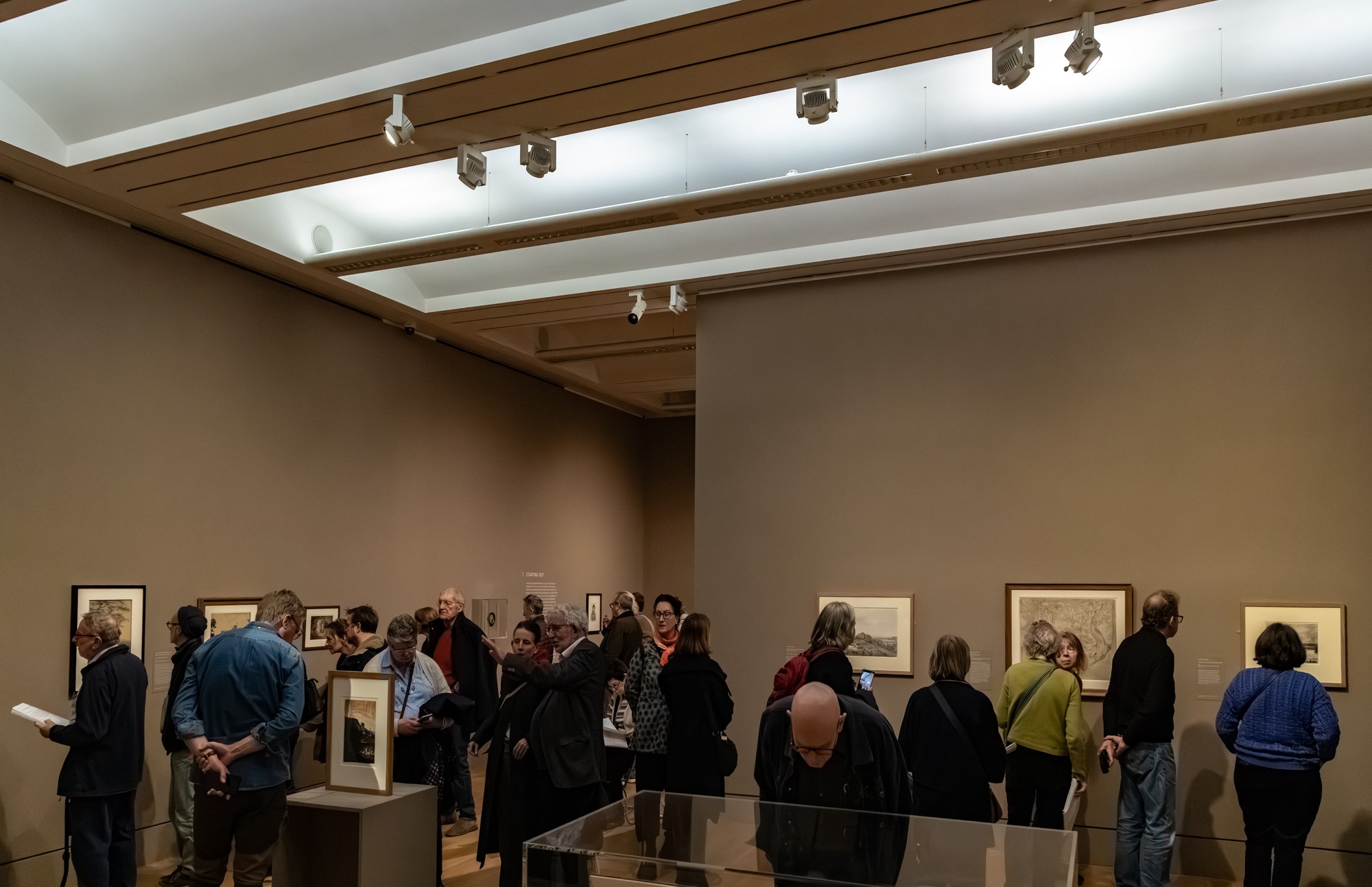
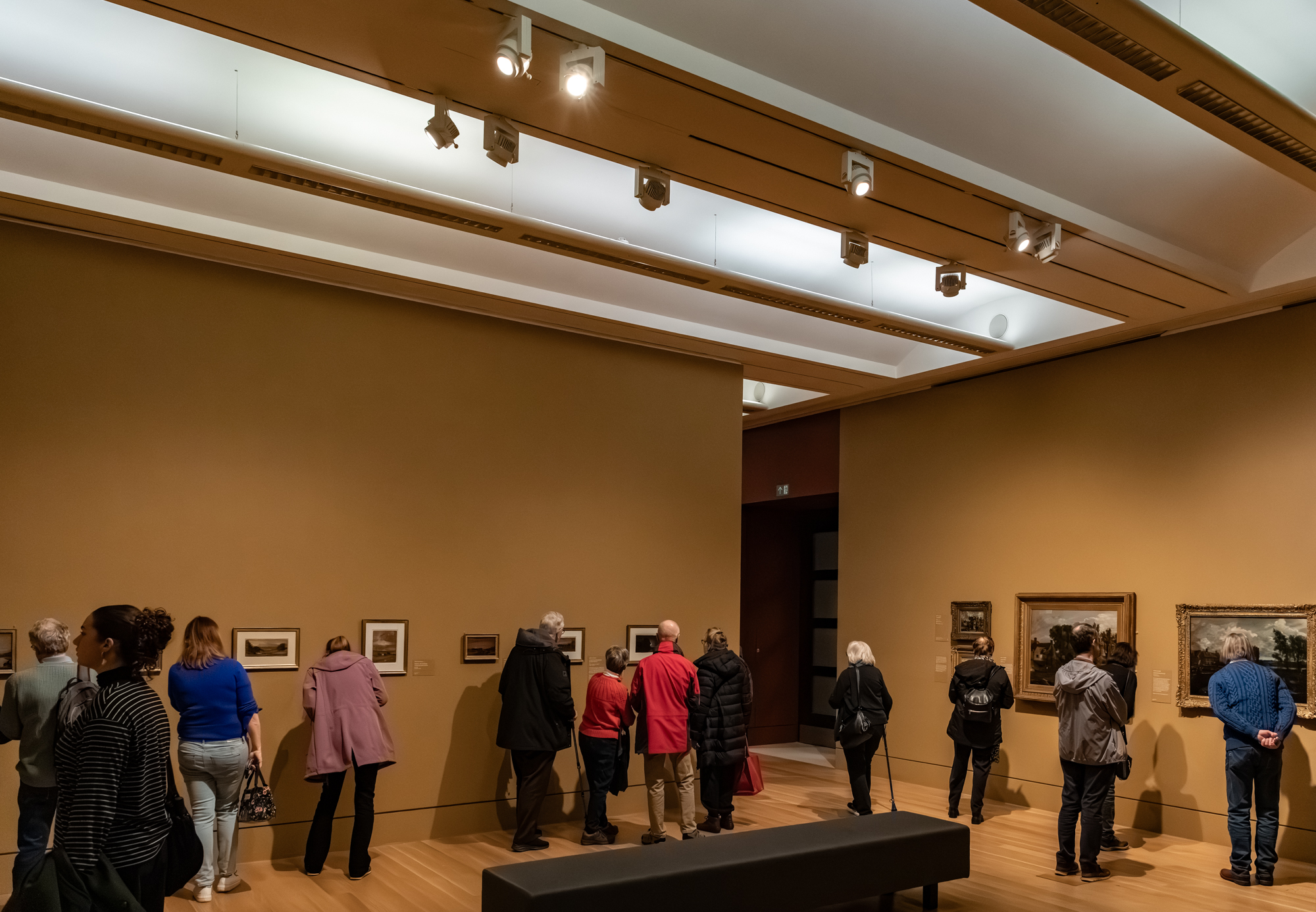
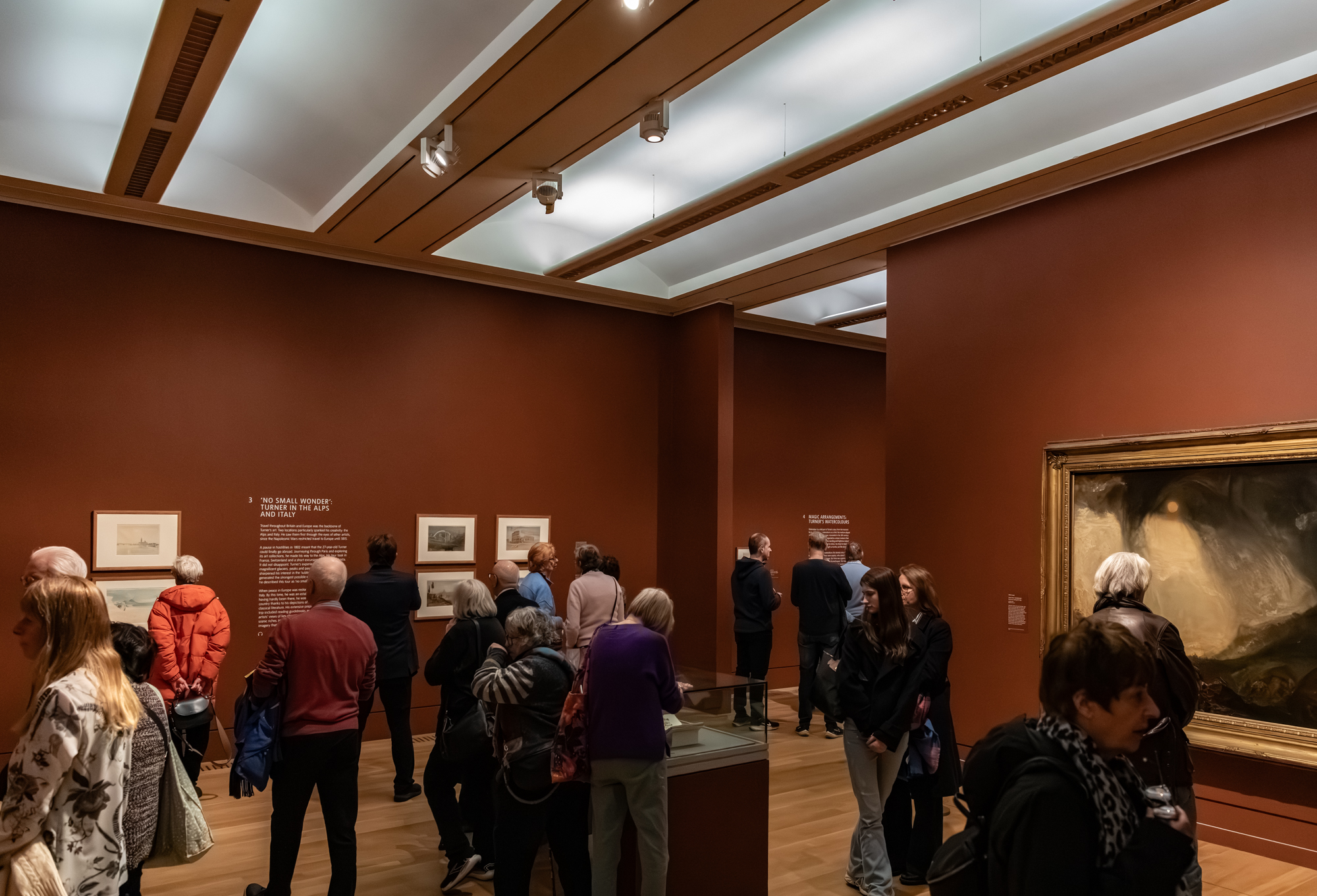
I took another shot at the entrance to the exhibition planning to record each room.
I took another shot at the entrance to the exhibition planning to record each room.
The florescent lighting figures in most of the exhibition and is an irritation.
I used a different setting on the camera to see if that influenced the final images.
I used a different setting on the camera to see if that influenced the final images.
The switch from green to beige and then to red based wall colours provides a 'changing' environment which must have a perceptual impact.
While the switch in lighting content from the entrance spaces is quite dramatic the changes in wall colours seems less so!
I was mostly holding the camera overhead with a single point focus.
The images have been processed with noise reduction except on the individual paintings today.
The images have been processed with noise reduction except on the individual paintings today.
The 'florescent' light setting on the camera does seem to provide a better colour resolution in the final image.
I am not sure how much the final image processing has 'filled out' the colour values today.
I am not sure how much the final image processing has 'filled out' the colour values today.
I should go back and check those overall colour values on a following visit.
I noticed that the neutral white lighting of the ceiling reflectors was achieved without special adjustments.
I noticed that the neutral white lighting of the ceiling reflectors was achieved without special adjustments.
I will try and get an overview of the exhibition on following visits, not least an understanding of how the later rooms in the exhibition fit into the overall 'picture'.
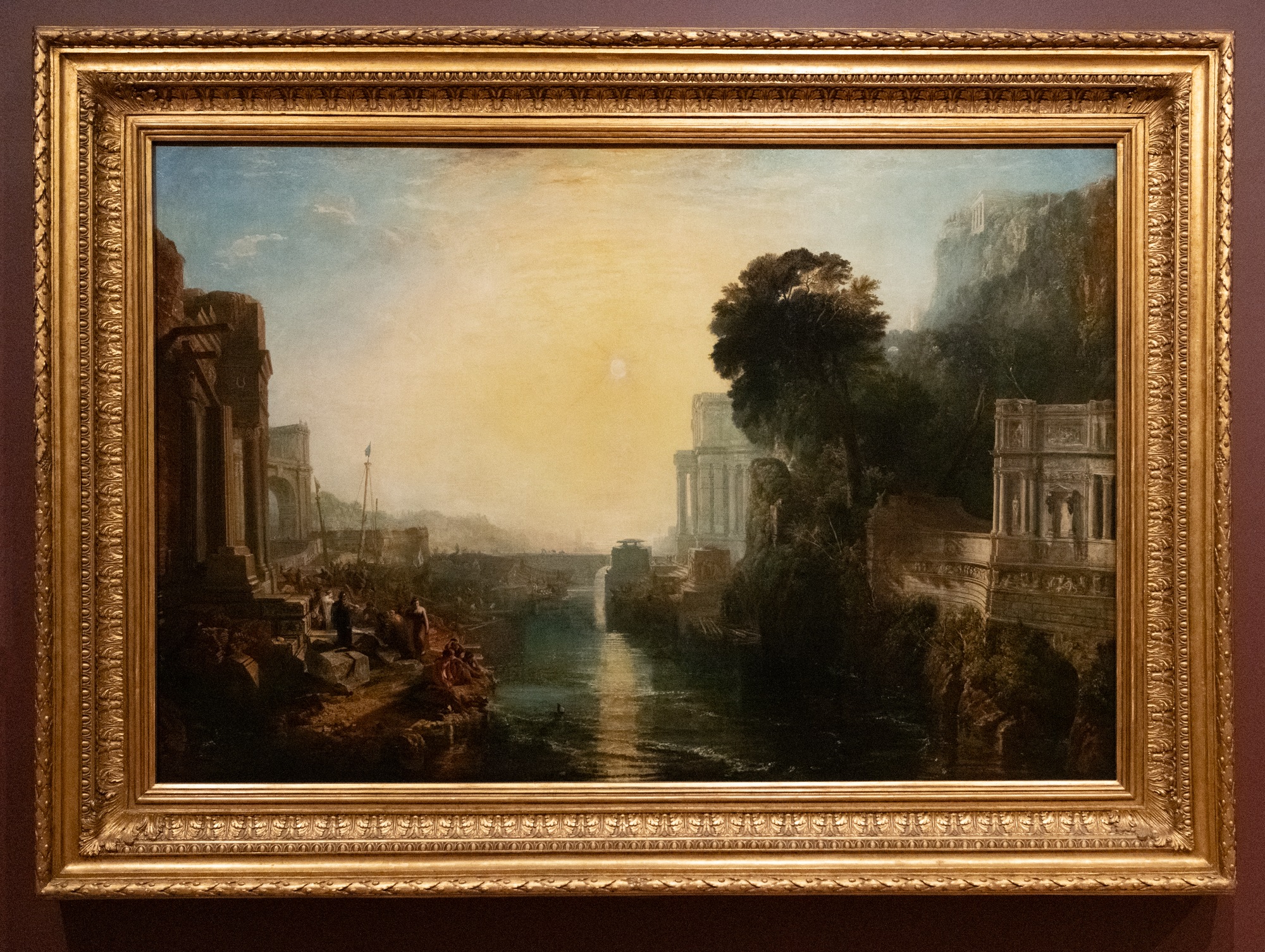
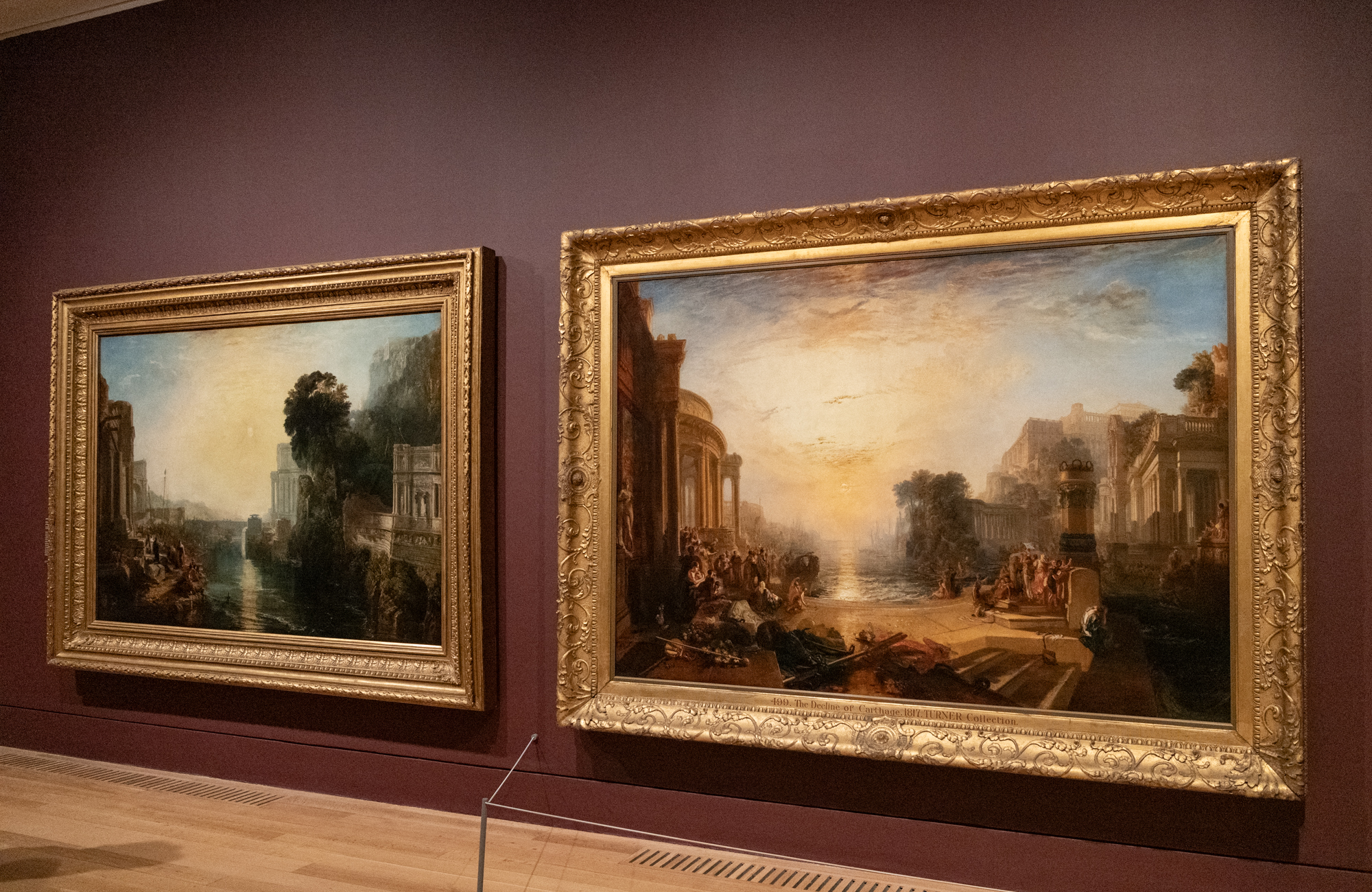
I eventually got stuck today in what I think is the ninth room and spent time looking at the two large Turner paintings.
JMW Turner
Dido building Carthage, or The Rise of the Carthaginian Empire
exhibited 1815
oil on canvas
155.5 x 230 cm
Dido building Carthage, or The Rise of the Carthaginian Empire
exhibited 1815
oil on canvas
155.5 x 230 cm
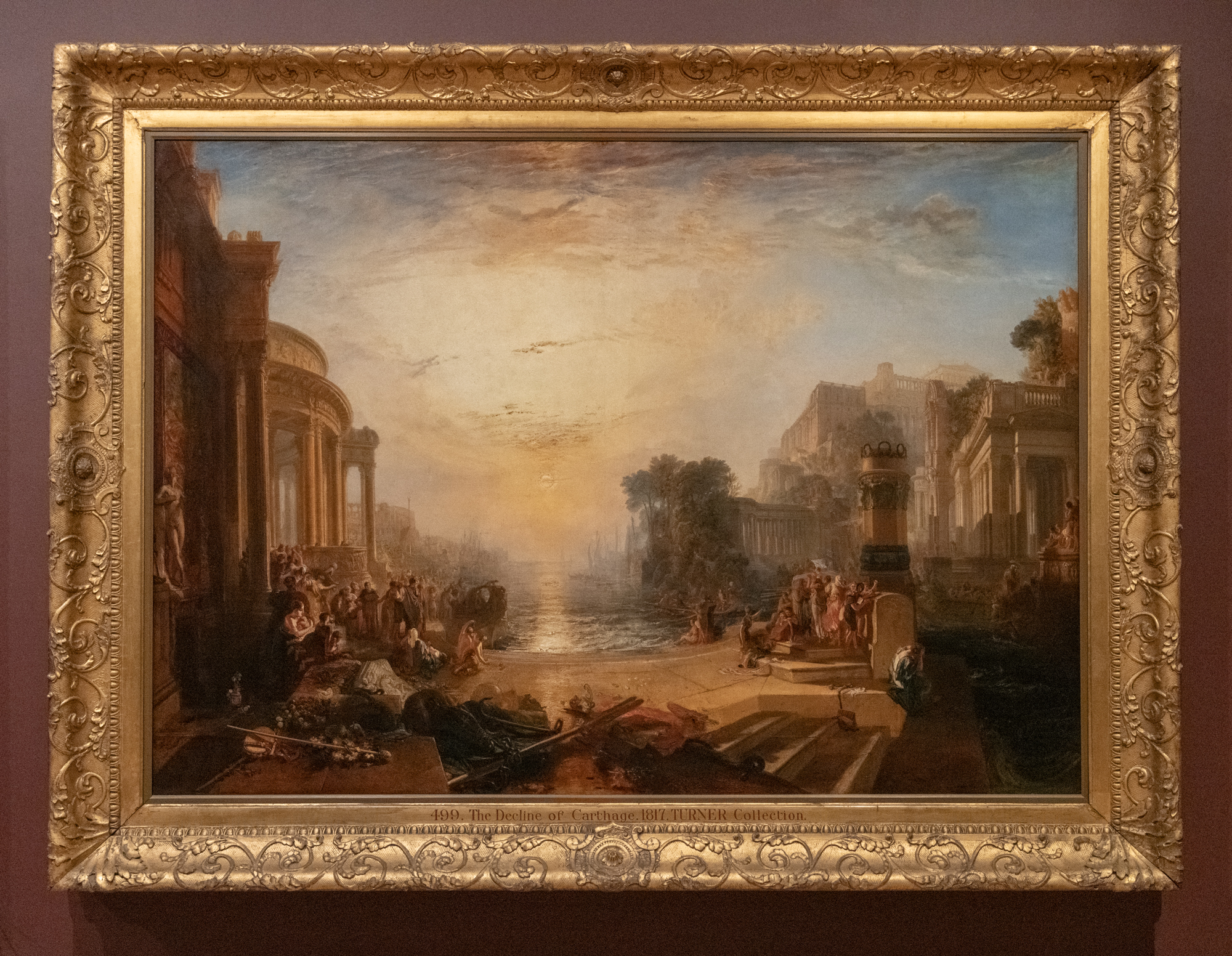
JMW Turner
The Decline of the Carthaginian Empire
exhibited 1817
oil on canvas
170 x 239 cm
The Decline of the Carthaginian Empire
exhibited 1817
oil on canvas
170 x 239 cm
I do keep finding that the proportions of the frames relative to the paintings make for a domestic reading rather than the apparently intended grand statements.