Fourteenth visit on Tuesday 7th January. Arrived at about 10:10. Busy again but today the plan was different... no camera!
Looked at the 'main' paintings in the exhibition marvelling at just how brilliantly observed they are.
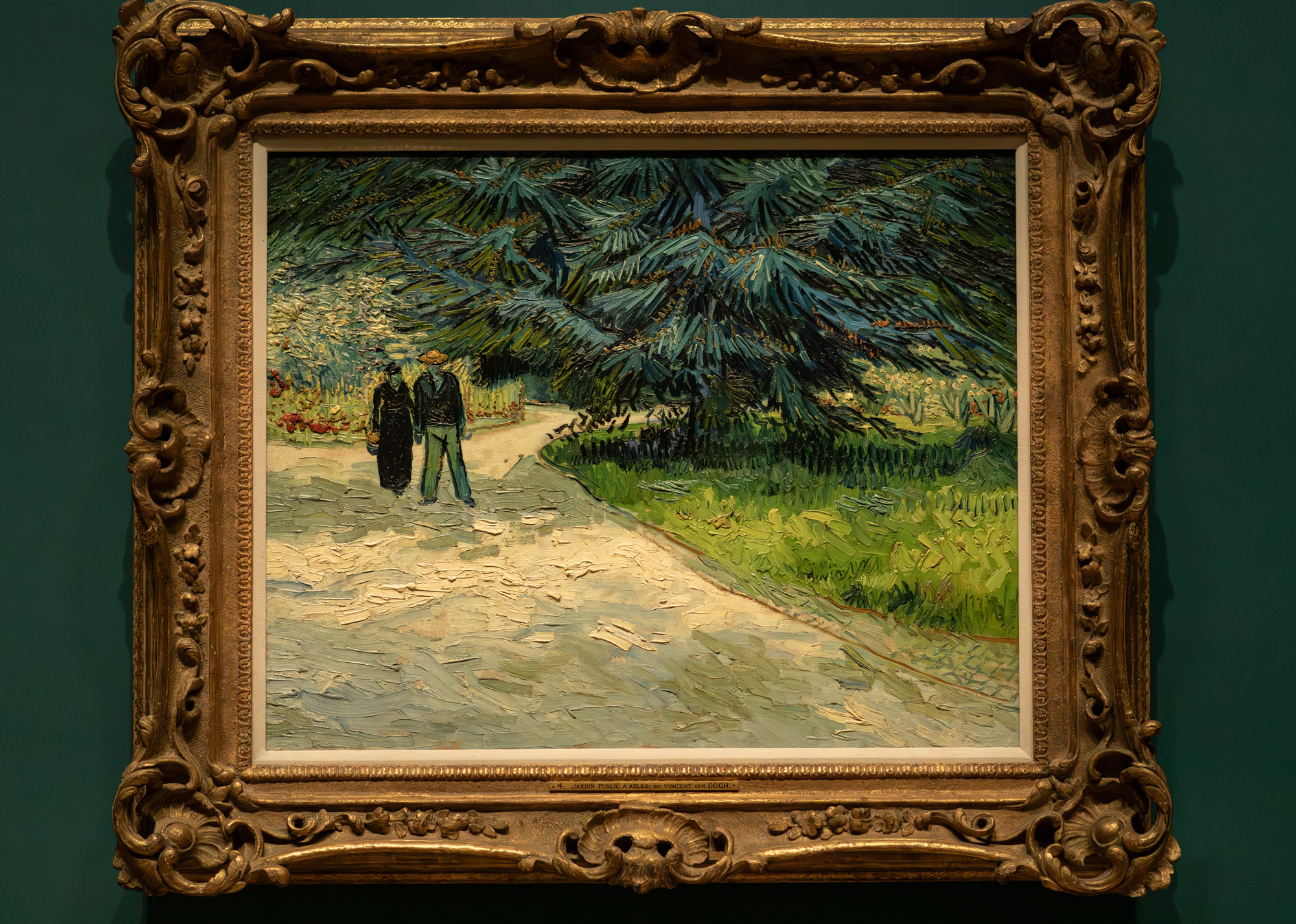
The Fir Tree looked 'low key' and the yellow green grass is actually way off saturated but the precision of the highlights and shadows is wonderful.
Public Garden with Couple and Blue Fir Tree: The Poet's Garden III, Arles October 1888
oil on canvas
73 x 92 cm
Private Collection
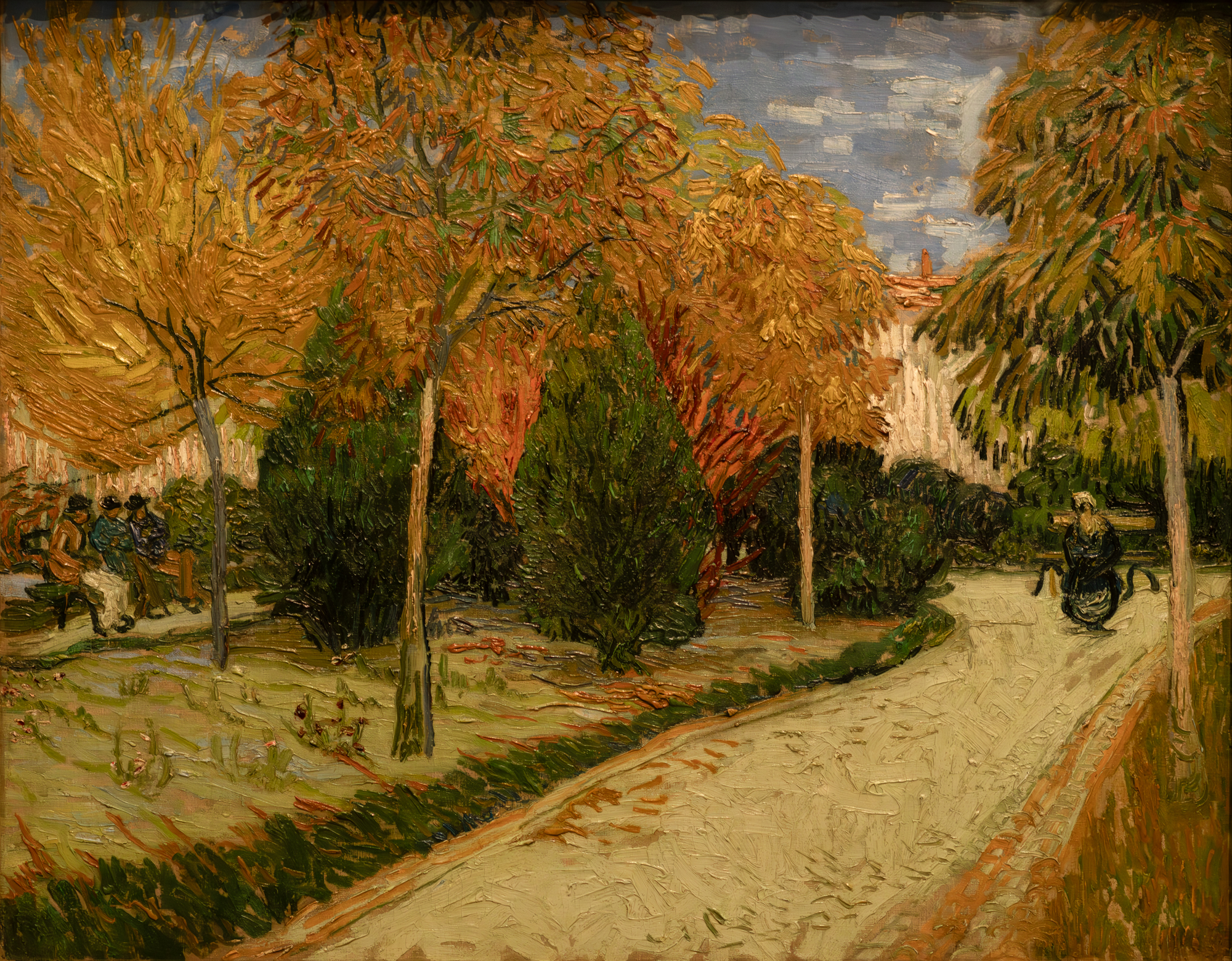
The Public Park has some very distinctive colour but the 'flat' tree in the centre and the slight tree trunks are a bit of a letdown.
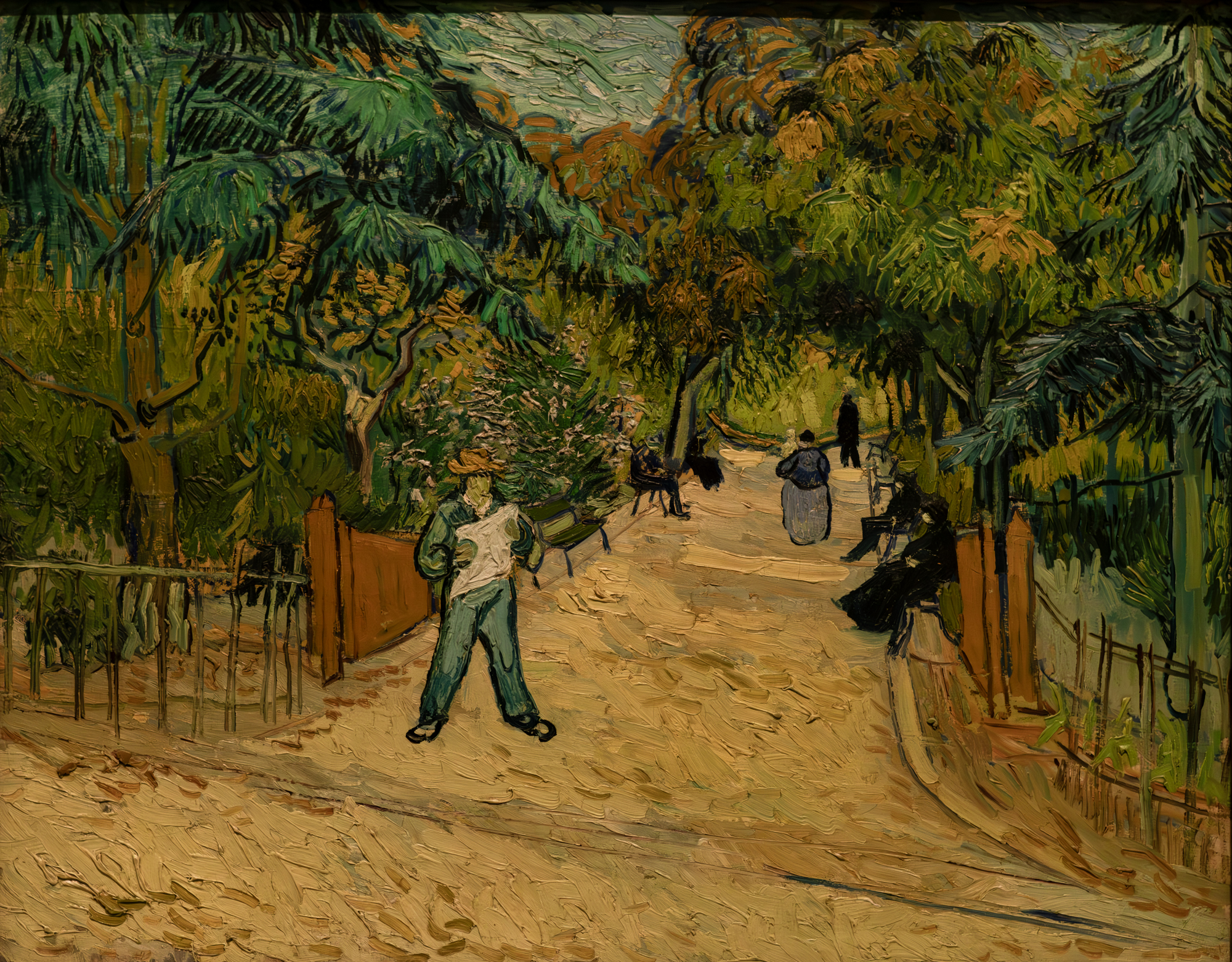
The other Park Entrance painting has not got the definition and gets a bit unfocused in the tree tops.
The Public Park at Arles Arles: October, 1888
oil on canvas
72 x 93 cm Private collection
Entrance to the Public Park in Arles, September, 1888 oil on canvas
72.5 x 91 cm The Phillips Collection, Washington
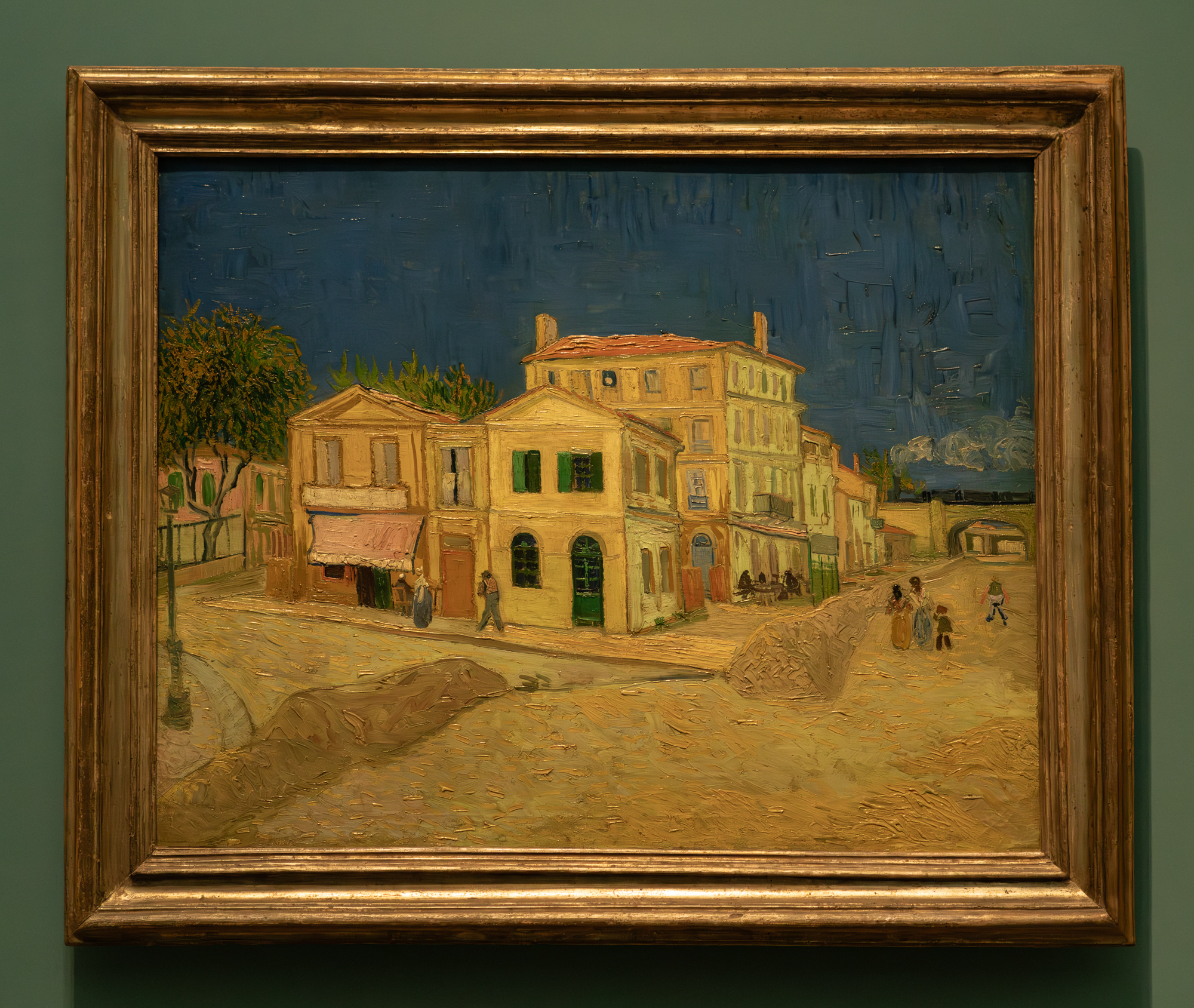
The Yellow House looked pale and wan to start with, as always, but the palette of yellows ends up being quite amazingly articulate from the intense dashes to the 'grubby' ground. Quite what the colours are, out of context I cannot imagine.
Vincent's House in Arles (The Yellow House) 1888 oil on canvas
72 x 91.5 cm Van Gogh Museum, Amsterdam.
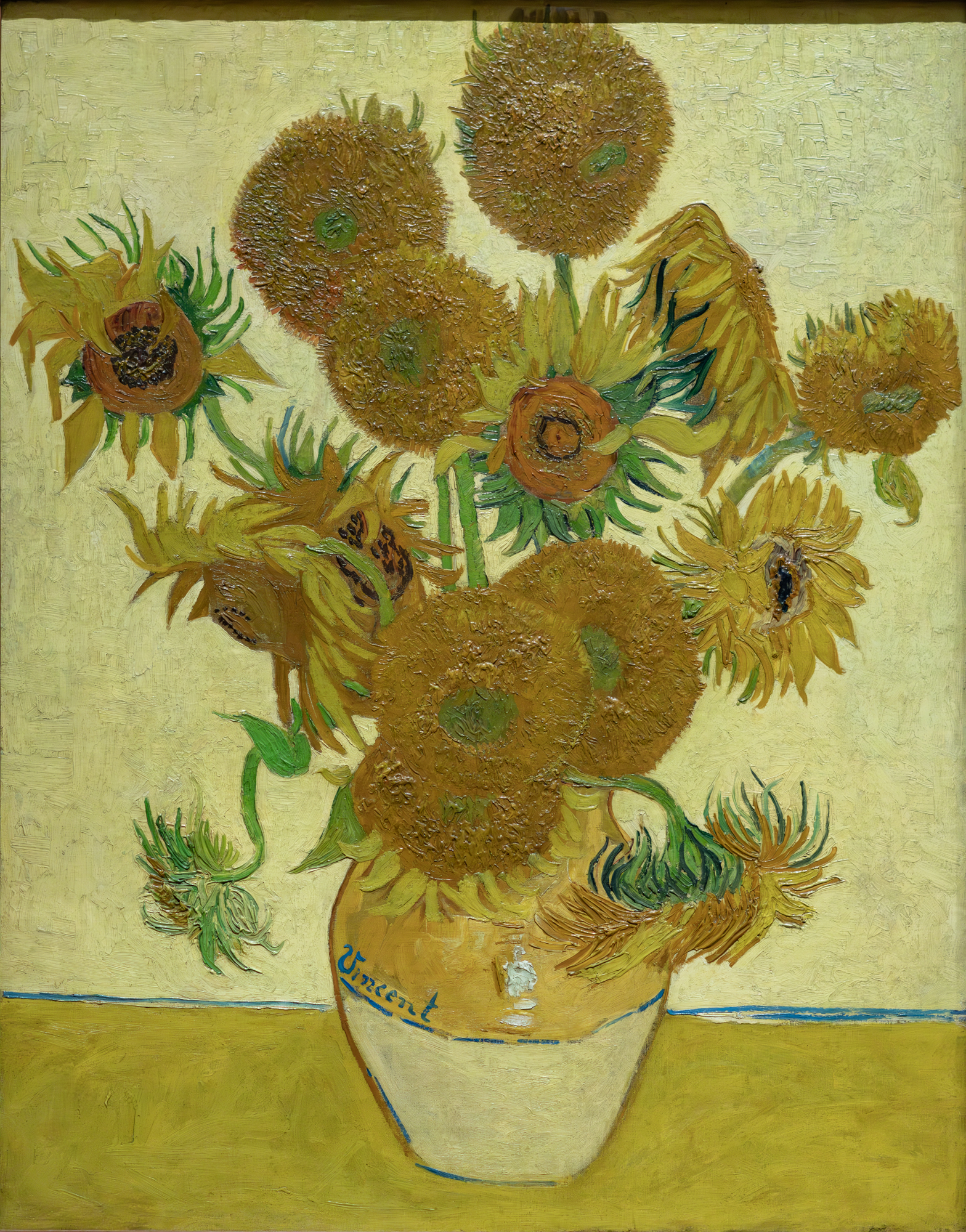
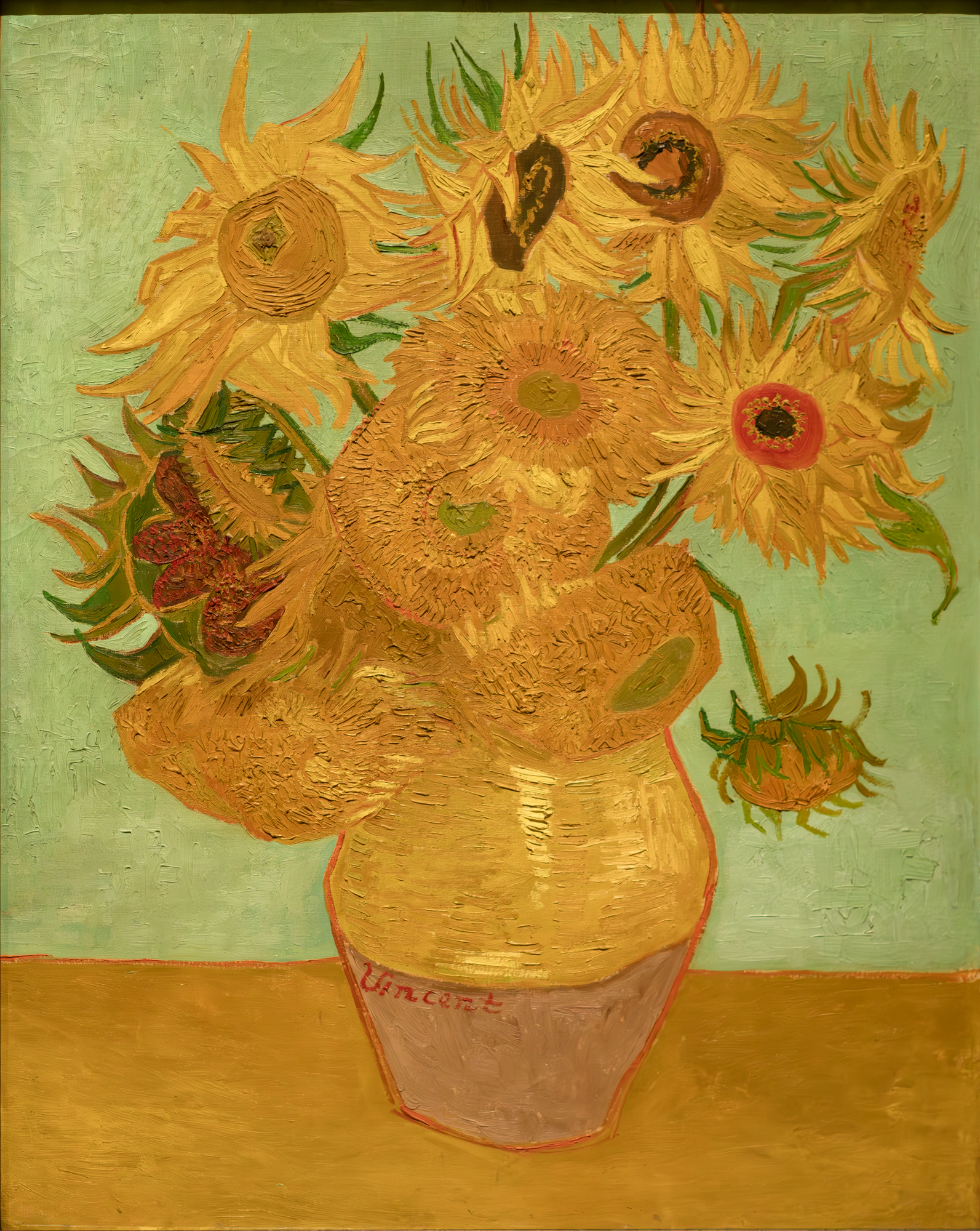
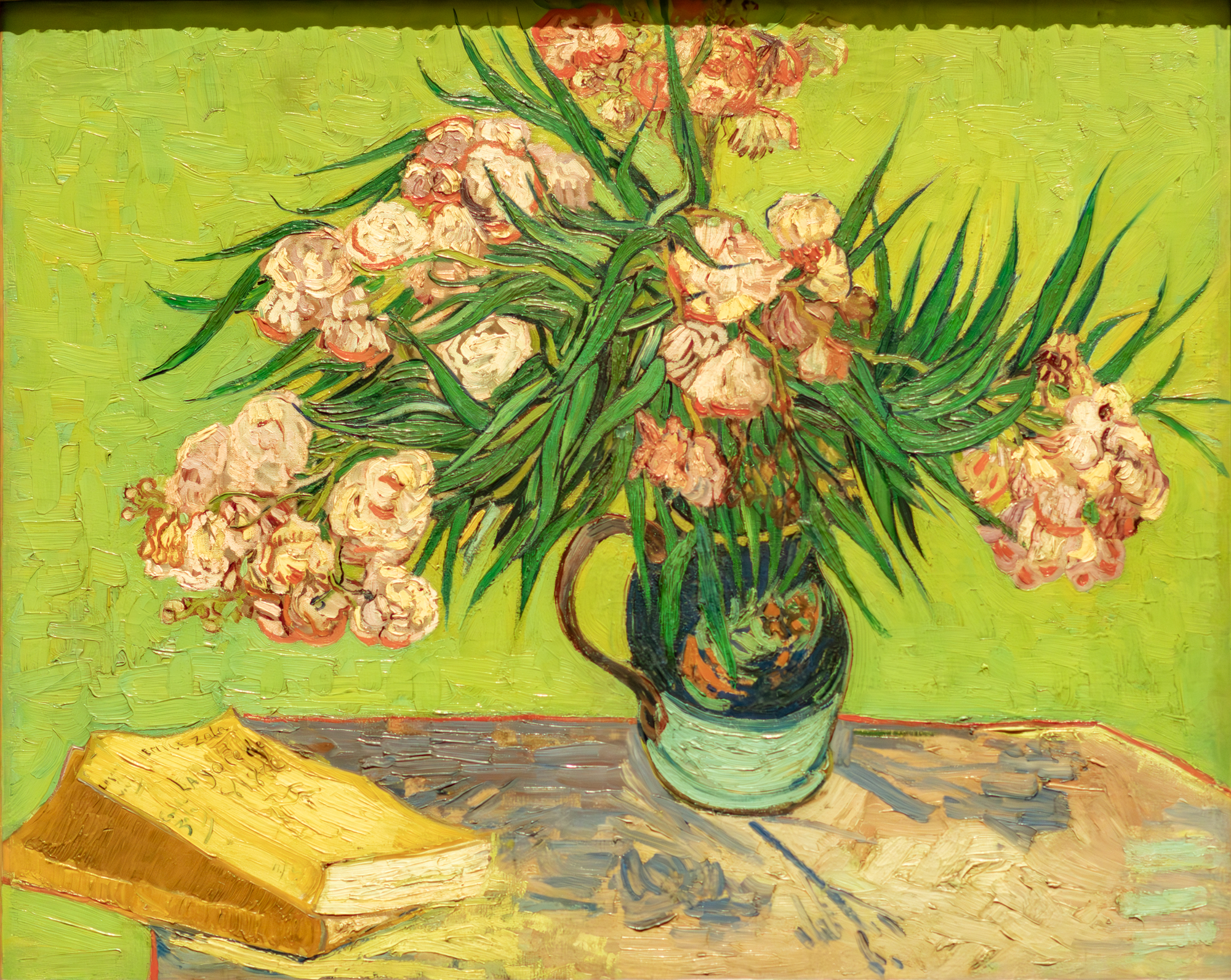
The Sunflowers are disappointing compared to the Oleanders painting with its dramatically articulated shadows on the table top. The only problem is a 'mannered' shaping of the leaves which is also evident in the Sunflowers leaves and petals.
Still Life: Vase with Fifteen Sunflowers, Arles: January, 1889
oil on canvas
100.5 x 76.5 cm
Sompo Japan Museum of Art, Tokyo
Still Life: Vase with Twelve Sunflowers, Arles: January, 1889
oil on canvas
92 x 72.5 cm
The Philadelphia Museum of Art
Still Life: Vase with Oleanders and Books, Arles: August, 1888
oil on canvas
60.3 x 73.6 cm
Lent by The Metropolitan Museum of Art, Gift of Mr. and Mrs. John L. Loeb, 1962
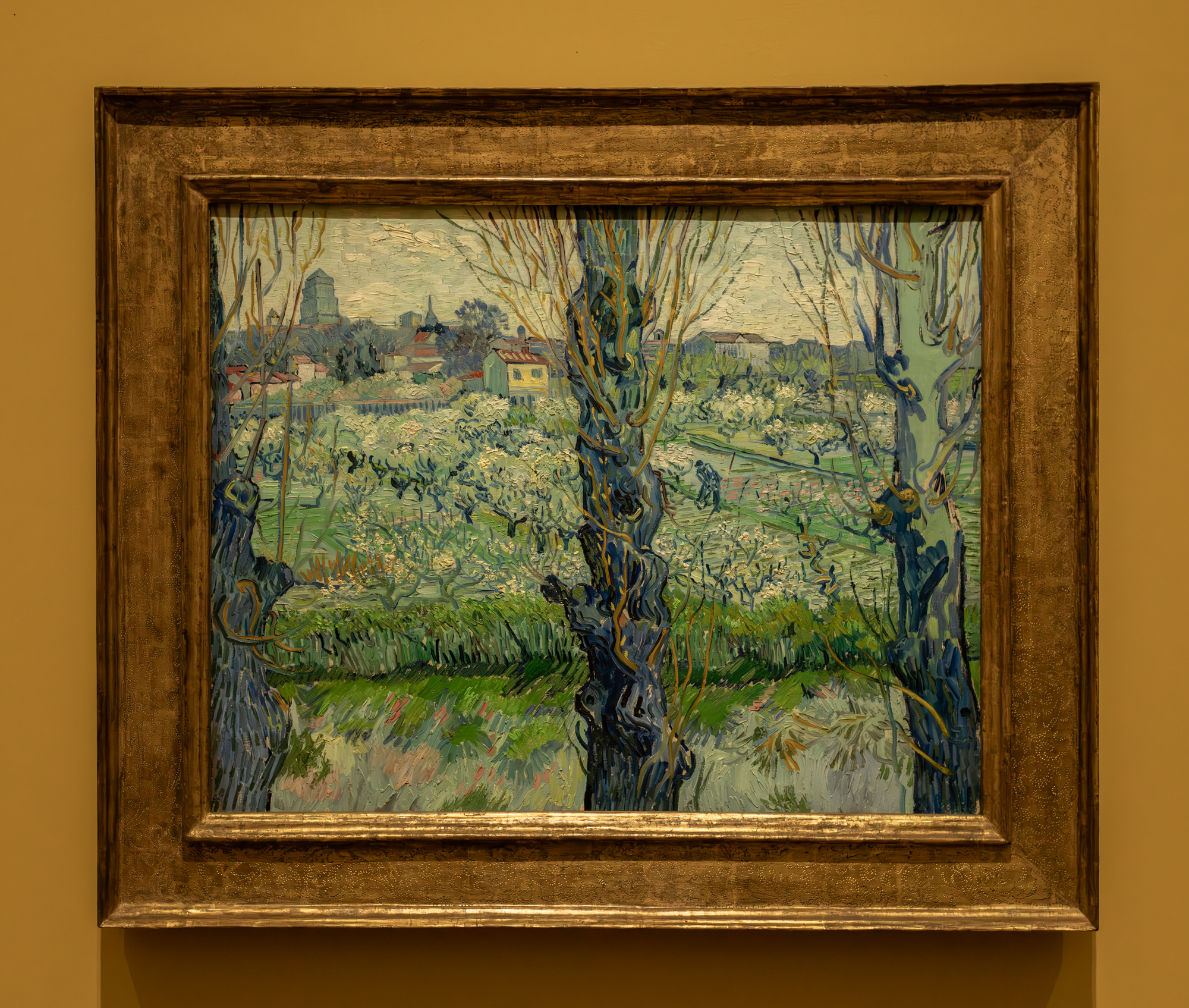
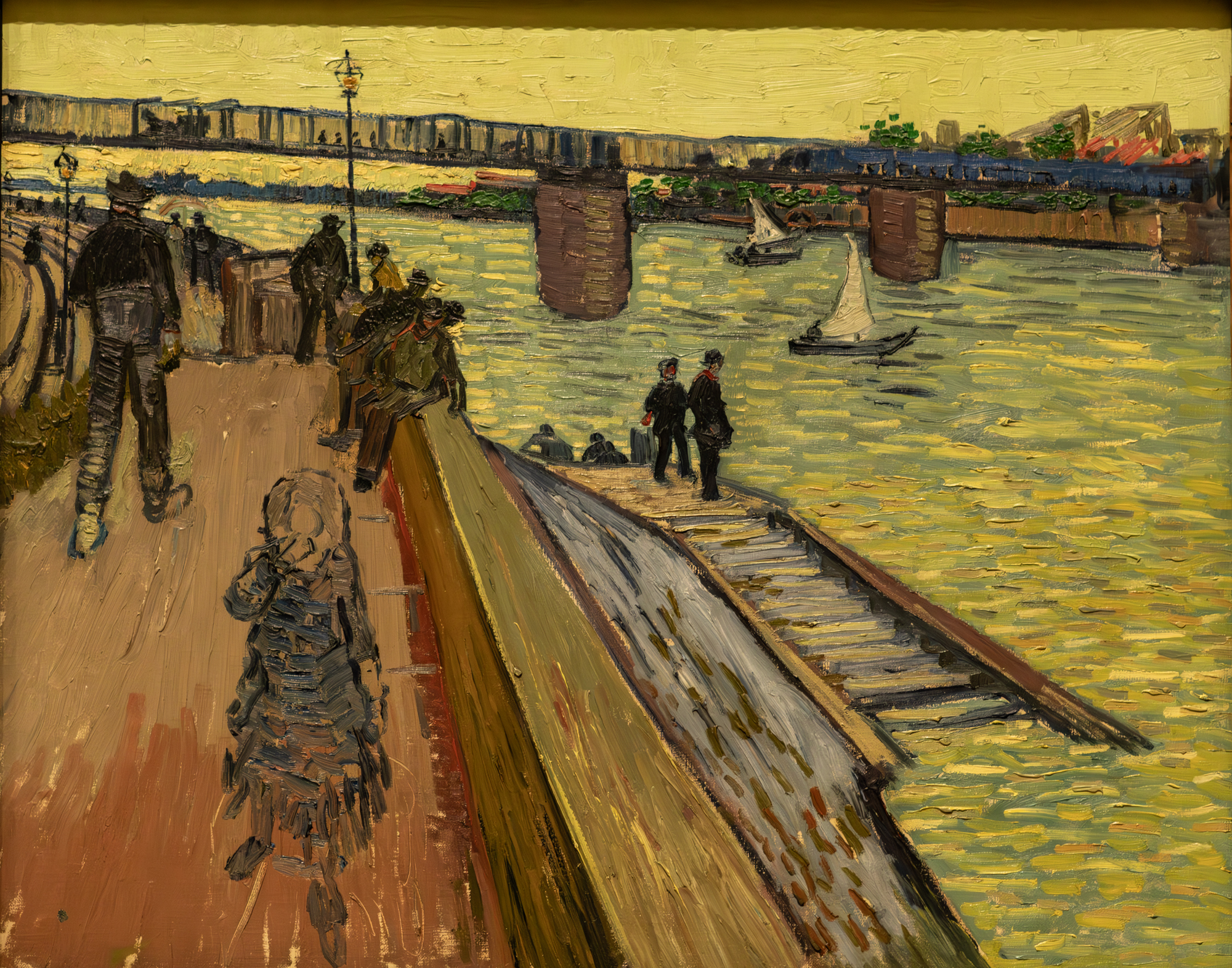
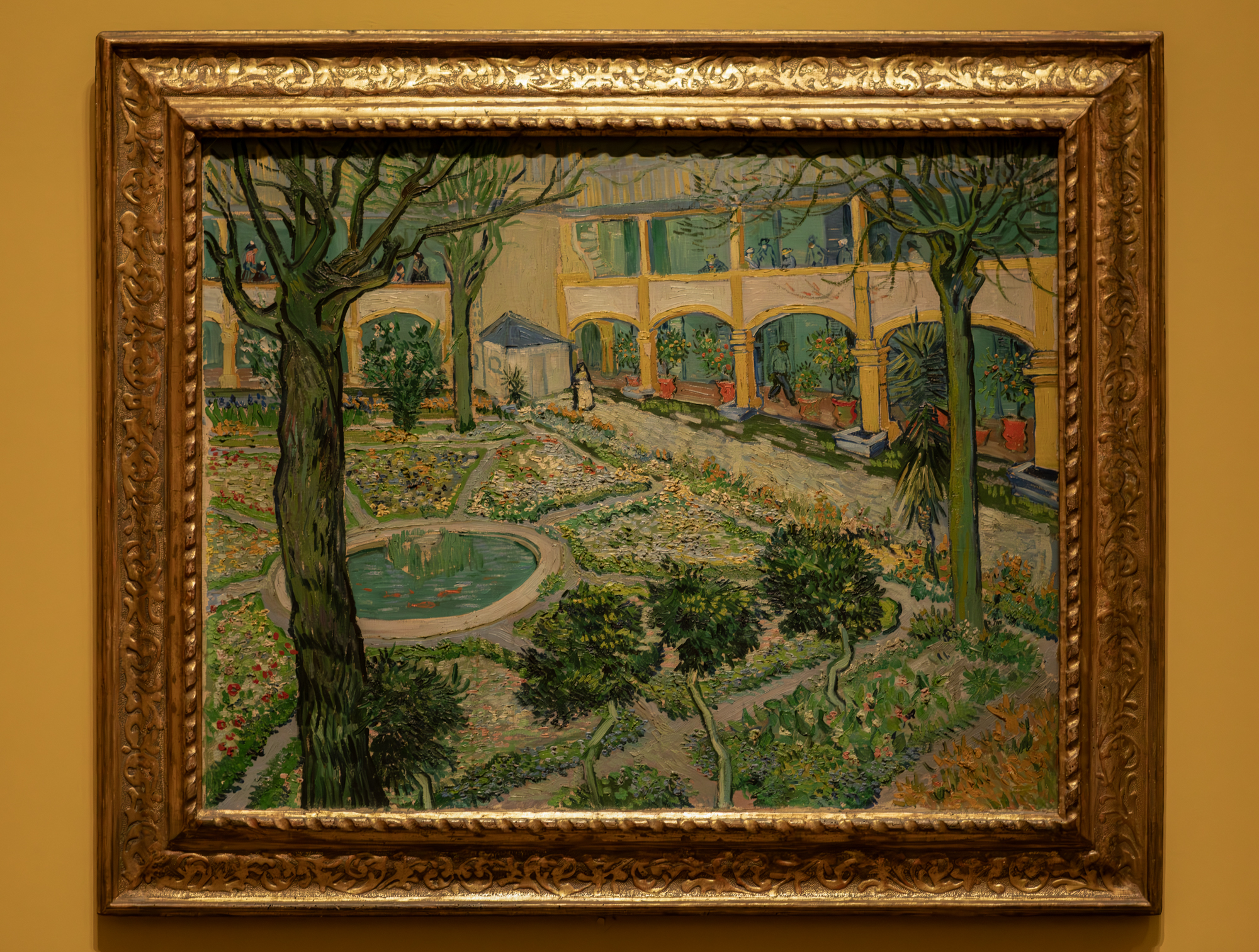
The Orchard painting holds attention and in the context between the river bridge and road menders with the hospital courtyard and the fields moving towards the horizon provides an interesting context which may provide an insight into the whole exhibition.
There is a focus in the Orchard painting which is missing in the courtyard painting. Maybe pigment has faded as in the river bridge painting.
View of Arles, Flowering Orchards 1889
oil on canvas 72 x 92 cm Bayerische Staatsgemäldesammlungen - Neue Pinakothek, Munich
The Bridge at Trinquetaille Arles: June, 1888
oil on canvas
65 x 81 cm Private collection
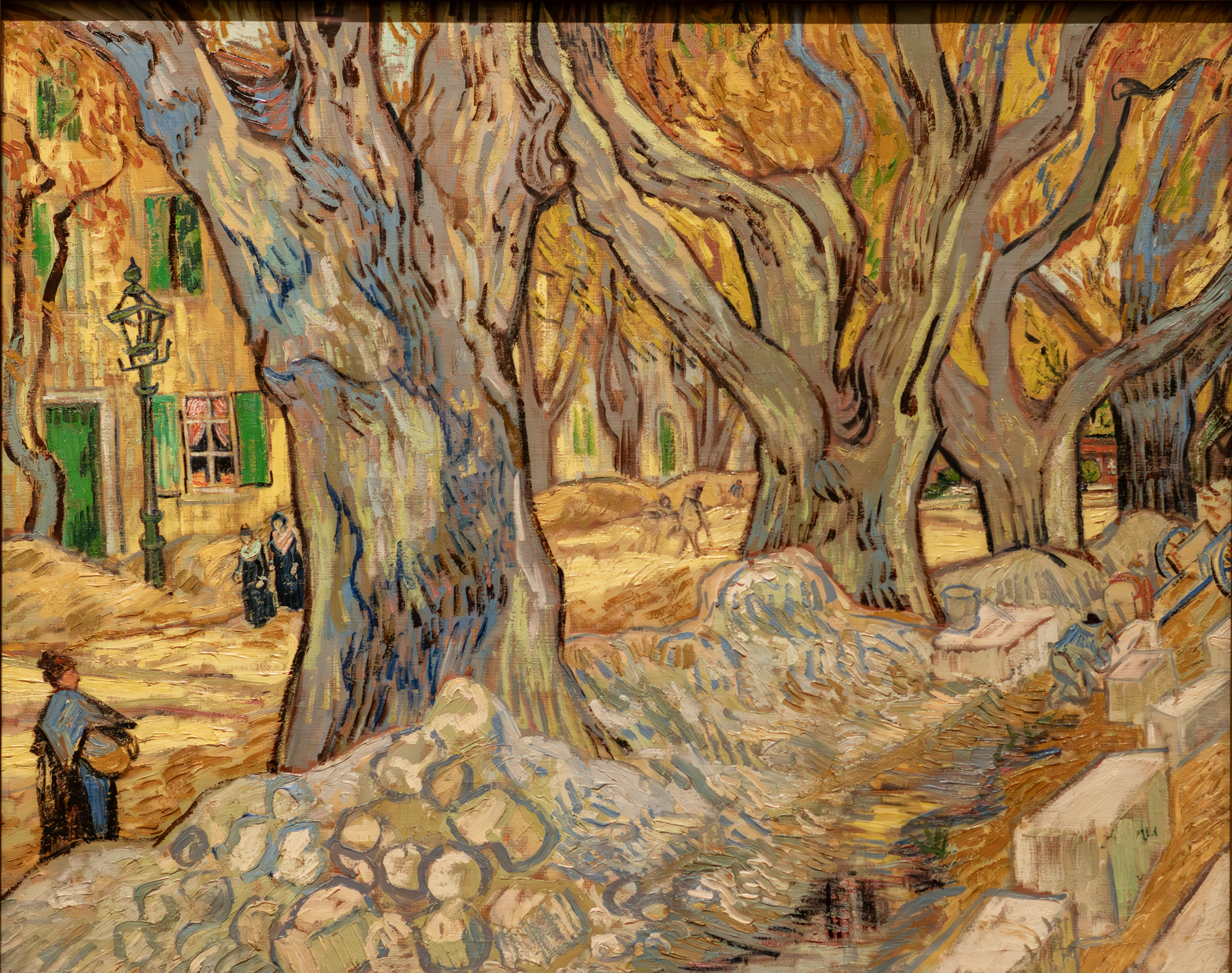
The Road Menders, Saint-Rémy: November, 1889
oil on canvas
73.4 x 91.8 cm
The Cleveland Museum of Art
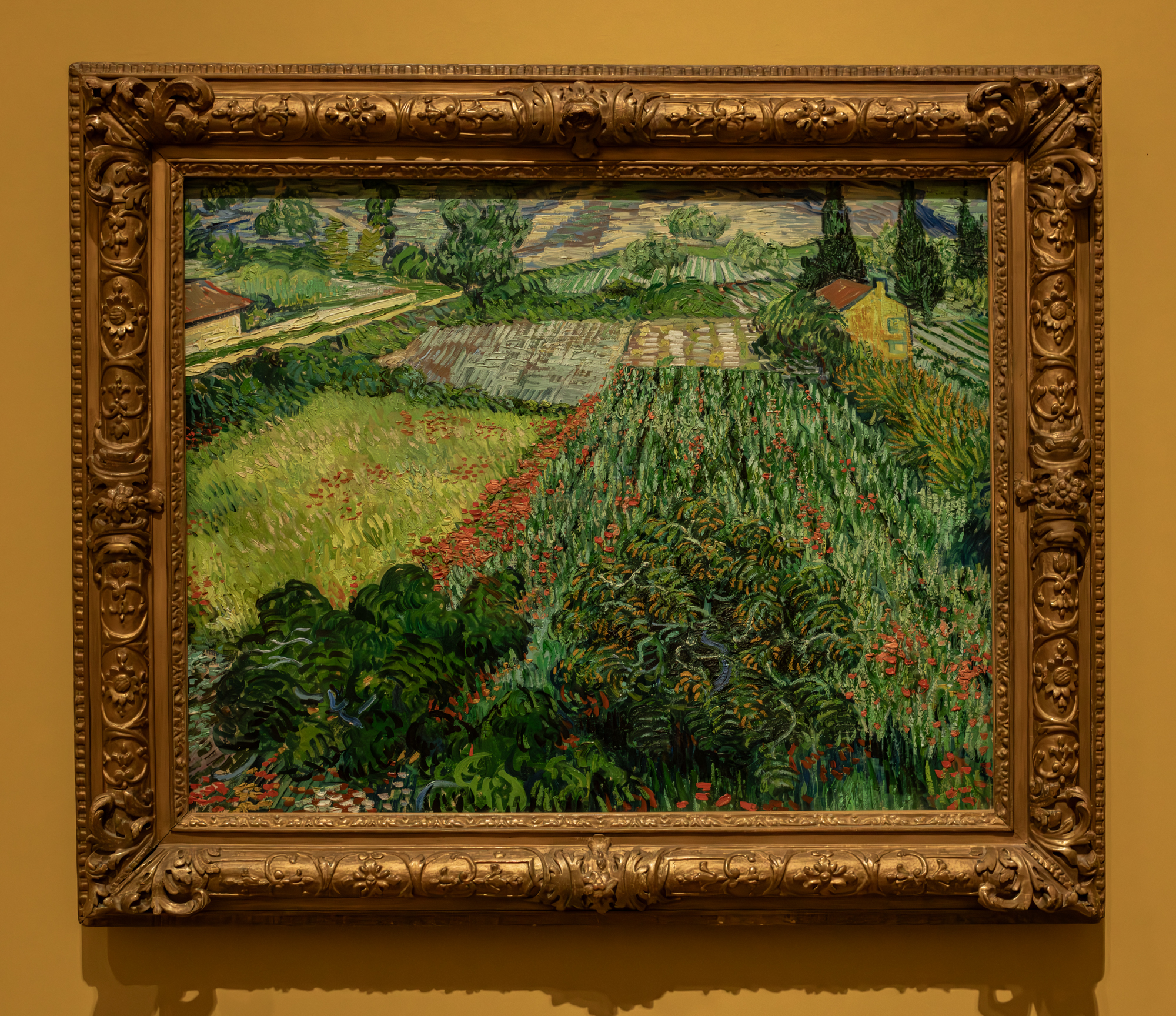
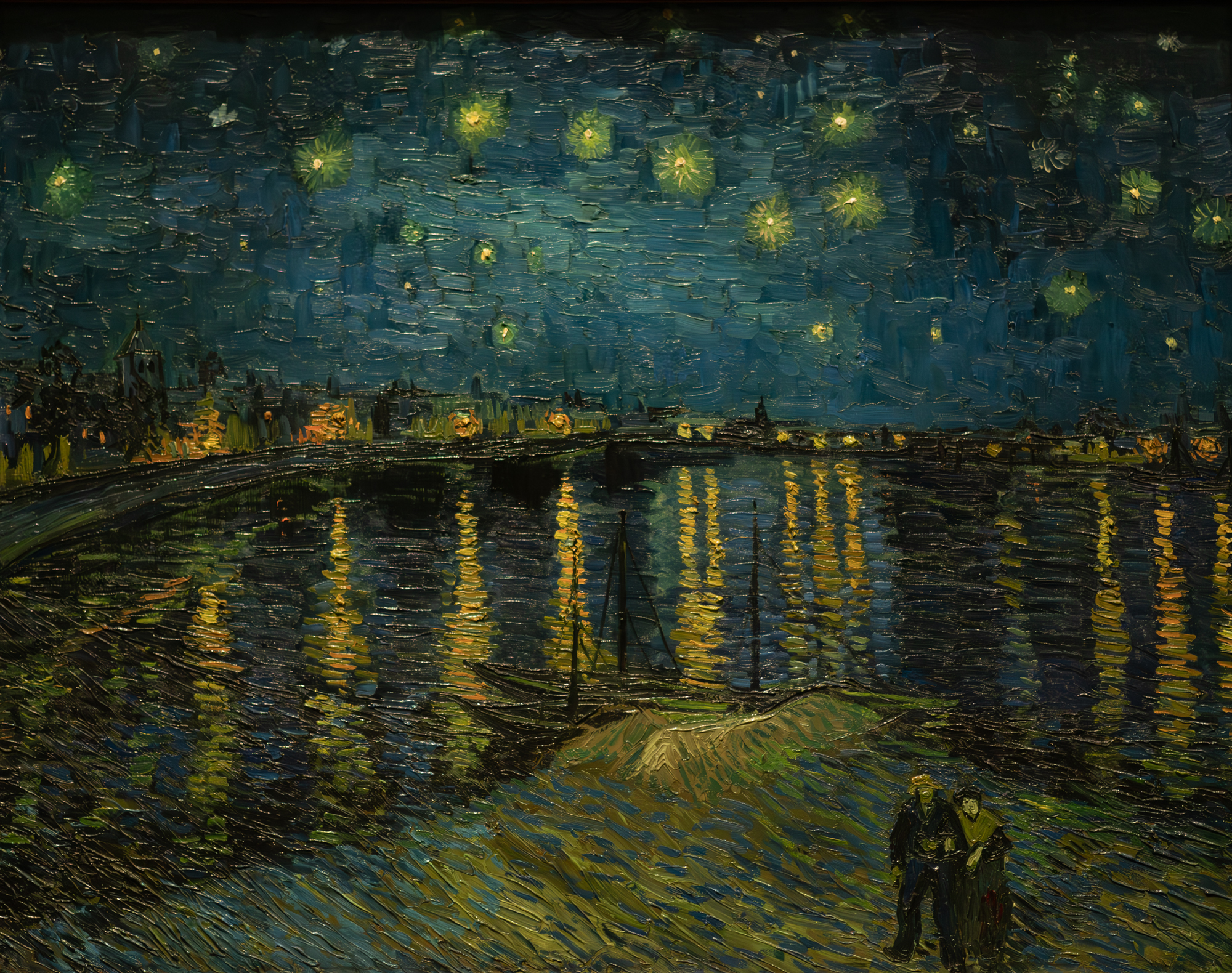
The incomplete nature of the river bridge and the road menders suggests that the Artist was best when completely focused on depicting the scene in front of him. When the paintings are 'invented' away from the actual scene the mannered elements are less successful. Swirling skies are much less visually complete than the attempt at depicting a starlit scene over the river. The fields moving towards the horizon are great in the middle and possibly far distance (shadowed by the frame) but the foreground is over worked and loses focus of depiction.
The Courtyard of the Hospital at Arles, April, 1889
oil on canvas
73 x 92 cm
Oskar Reinhart Collection 'Am Römerholz' Winterthur
Field with Poppies Saint-Rémy: early June, 1889 oil on canvas
71 x 91 cm
Kunsthalle Bremen
Starry Night Over the Rhone, Arles, September, 1888
oil on canvas
72.5 × 92 cm
Musée d’Orsay, Paris
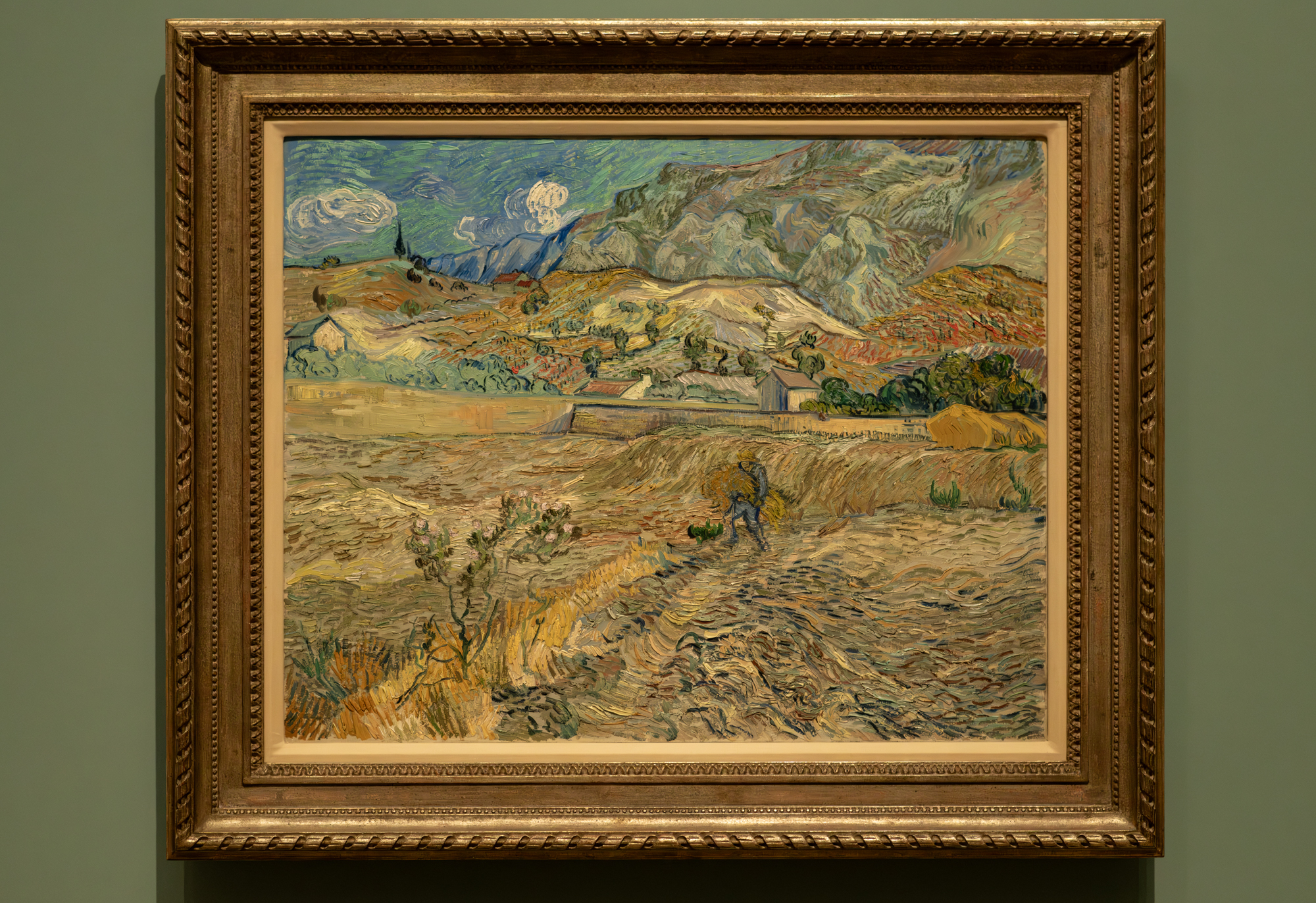
Moving on to the walled field everything is in focus except the slight 'swirling' of the small patches of sky. The wall of the field is a respite from the visual activity.
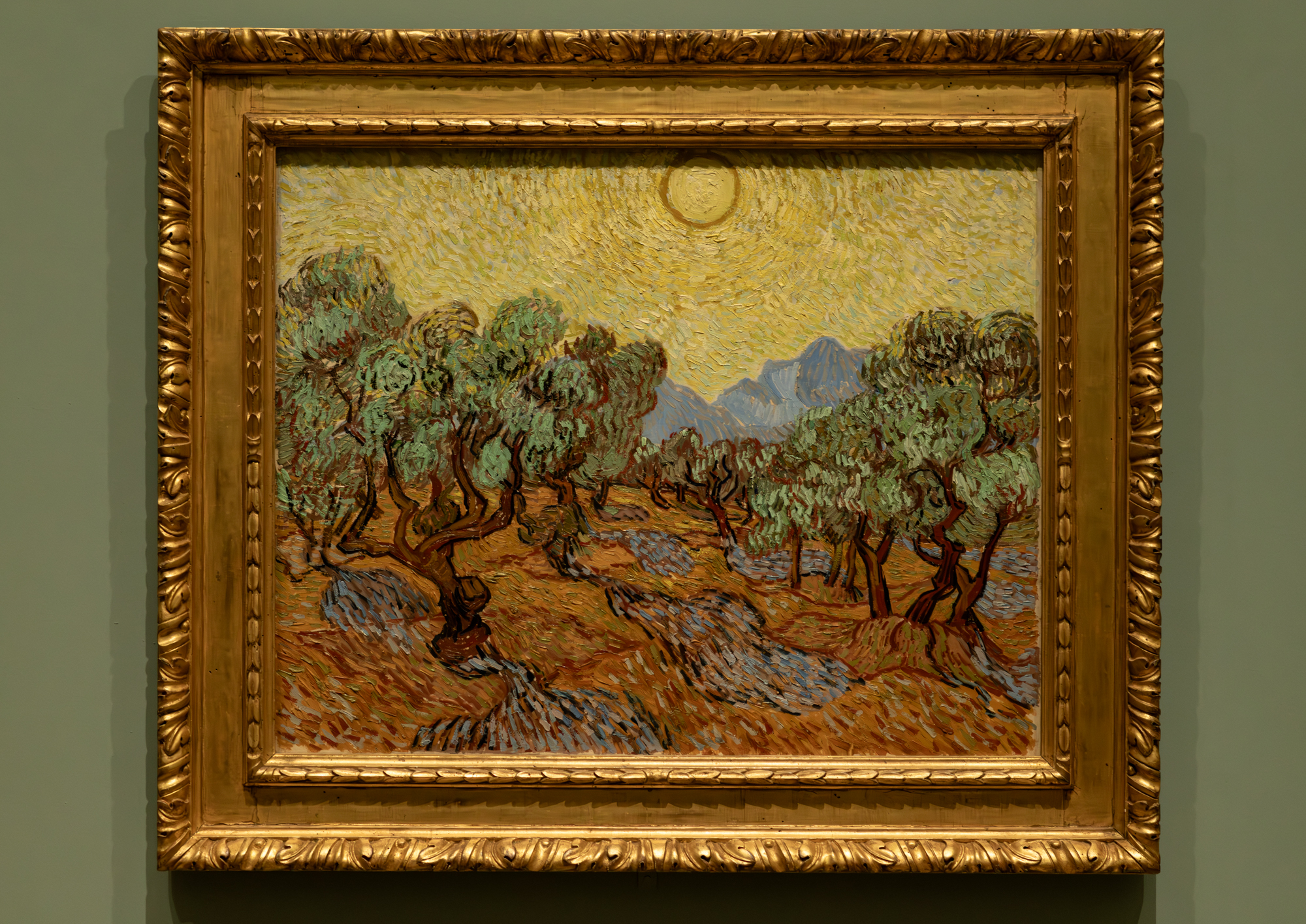
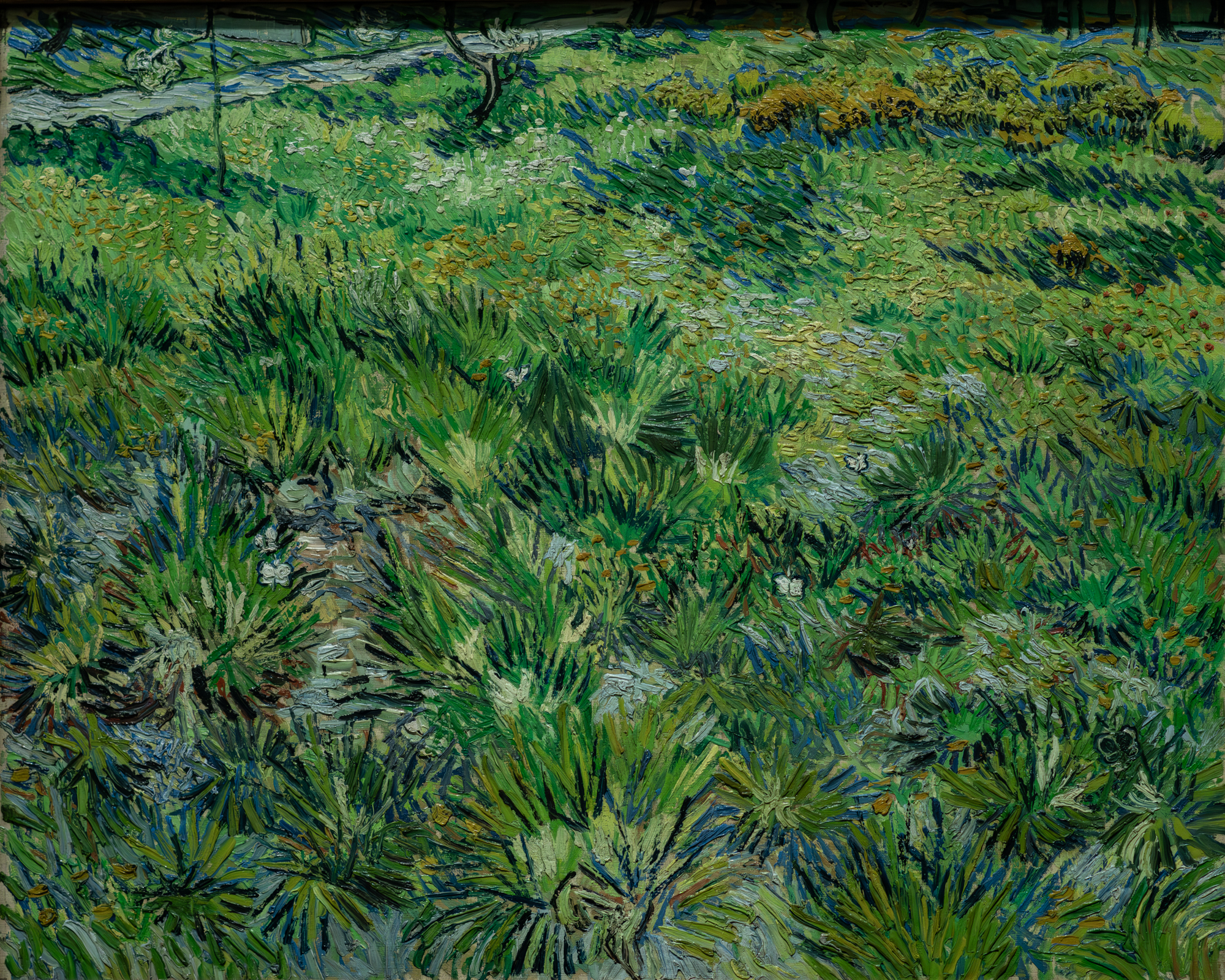
The Olive Grove painting is less focussed than the grass painting which ends the exhibition in a slightly manic 'frenzy' of getting the 'wet paint' to depict the scene.
Enclosed Wheat Field with Peasant Saint-Rémy: early October, 1889
oil on canvas
Indianapolis Museum of Art at Newfields Gift of James W Fesler
Olive Trees with Yellow Sky and Sun, Saint-Rémy: November, 1889
oil on canvas
73.7 x 92.7 cm
Lent by the Minneapolis Institute of Art, Minneapolis. The William Hood Dunwoody Fund
Meadow in the Garden of Saint-Paul Hospital, Saint-Rémy, May, 1890
oil on canvas
64.5 x 81 cm
National Gallery, London
From December 17th...
...and then arrived at the end of the exhibition. I will go back for a couple more visits in January that are booked already but will probably just be 'looking' at the paintings. No need to say more, I think!
Fifteenth visit on Tuesday 14th January 2025 was a 'goodbye' visit. I arrived at about 10:20am and did walk the whole show seeing every one of the works for a final look. I did stick with a couple of the paintings.
It was very busy and I feel somewhat sorry for those visitors who simply will not be able to go back for another look.
The final visitor number was 334,589 according to The National Gallery.
The lesson I learned really was the value of engaging with the paintings and getting to know the visual environment that the Artist was tackling, close up. In earlier notes I had referred to a situation where it initially felt difficult to engage where the paintings seemed in some way opaque or even somewhat bland. In some cases even the more accessible works proved to be worth extended 'observation'. The final painting that I spent time with today was Enclosed Wheat Field with Peasant from 1889. Thank you...